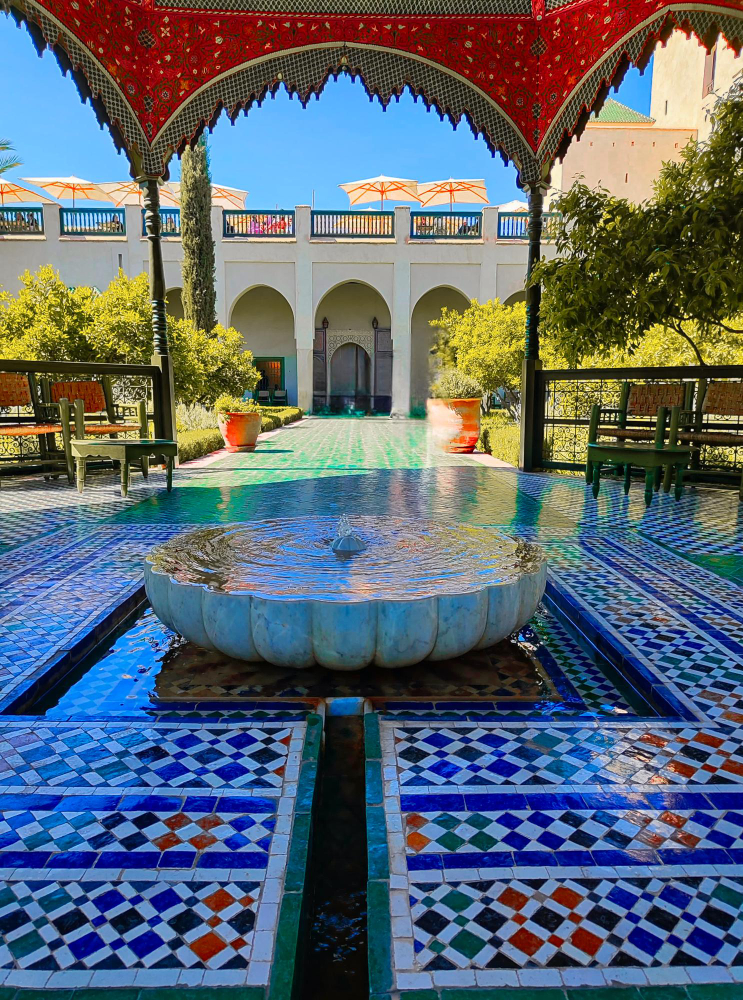
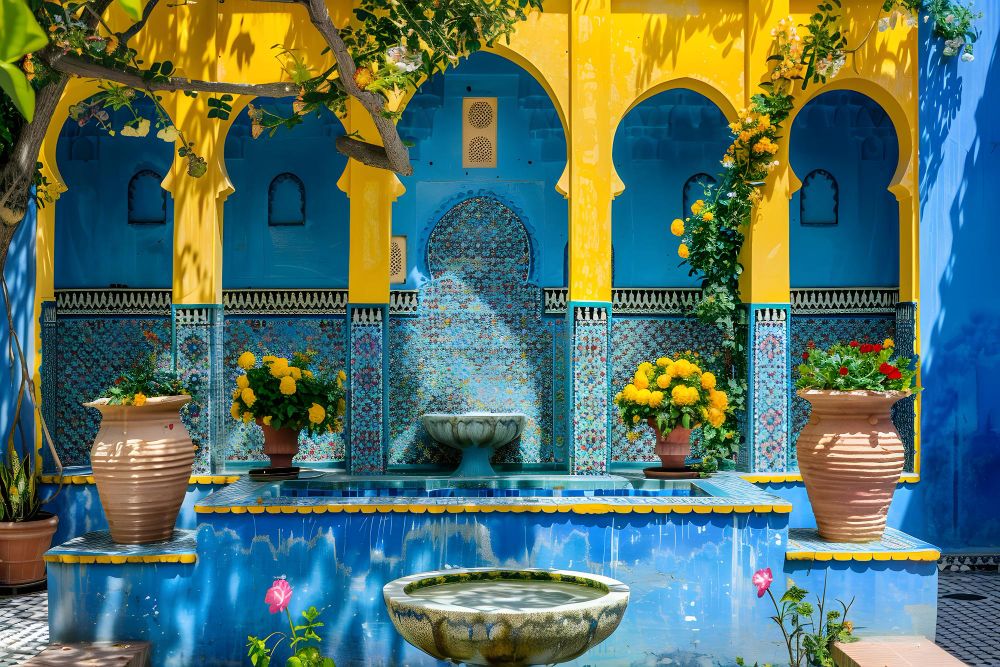
The Majorelle Gardens are one of the most iconic and visited destinations in Marrakech, Morocco. Known for its lush vegetation, vibrant blue colors, and fascinating history, this place attracts visitors from all over the world. However, for a person in a wheelchair, it is important to have accurate information about accessibility, services, and details of the place to ensure a comfortable and enjoyable visit. Below, we offer a detailed guide to the Majorelle Gardens, especially focused on the needs of people with reduced mobility.
History and Relevance of the Majorelle Gardens The Majorelle Gardens were created by French painter Jacques Majorelle in the 1920s. Inspired by traditional Islamic gardens and the exotic gardens of Morocco, Majorelle spent nearly forty years of his life creating this oasis in the heart of Marrakech. In 1980, the famous fashion designer Yves Saint Laurent and his partner Pierre Bergé acquired the property, restored the garden, and opened it to the public, turning it into a cultural and artistic landmark. Today, it is a vibrant place that reflects a passion for botany, art, and cultural preservation.
Accessibility for People in Wheelchairs The Majorelle Gardens have made considerable efforts to improve accessibility for people with reduced mobility. Below are the most relevant aspects of accessibility in the Majorelle Gardens:
Entrances and Access: The gardens have an accessible entrance for people in wheelchairs. The main access is designed to facilitate entry and exit without significant barriers. There are gentle ramps that allow for barrier-free entry, and the garden staff is available to assist visitors who need it.
Paths: Once inside the gardens, the paths are paved and relatively wide, making it easy to move around in a wheelchair. Most areas of the garden are accessible, including the main observation areas and the areas around fountains and sculptures. However, some smaller paths may have gravel or uneven surfaces, so caution is advised in certain areas.
Berber Museum: Within the Majorelle Gardens is the Berber Museum, which offers a fascinating collection of artifacts and textiles from Berber culture. This museum is also accessible for people in wheelchairs. There are ramps and elevators that allow visitors to move easily between different sections of the museum.
Café and Souvenir Shop: There is a charming café within the gardens where visitors can relax and enjoy a refreshment or a light meal. The café is wheelchair accessible, and staff are available to help if needed. Additionally, there is a souvenir shop that offers a variety of handcrafted products and garden-related mementos. This shop is also accessible for people in wheelchairs.
Additional Services and Suggestions
Wheelchairs Available: The Majorelle Gardens offer a limited number of wheelchairs for visitors. These wheelchairs can be requested at the entrance, but it is advisable to call in advance to ensure availability.
Best Time to Visit: Marrakech can be extremely hot during the summer months. For a more comfortable visit, especially for people in wheelchairs, it is recommended to visit the Majorelle Gardens during the cooler seasons, such as fall or spring, or early in the morning or late in the afternoon during the summer.
Avoid Crowds: The Majorelle Gardens are very popular and can be quite crowded. To avoid crowds and enjoy a more peaceful experience, it is advisable to visit the gardens on weekdays and avoid weekends or public holidays.
Entrance Fees
The entrance fee to the Majorelle Gardens varies depending on the type of visitor:
Adults: 150 MAD (approximately 14 EUR)
Students: 60 MAD (with valid ID)
Children under 12: Free entry
The entrance to the Berber Museum within the Gardens has an additional cost:
Adults: 50 MAD (approximately 5 EUR)
Students: 30 MAD
It is important to mention that prices may change, so it is recommended to check the updated costs on the official website before the visit.
Accessible Restrooms: The Majorelle Gardens have adapted restrooms for people with reduced mobility. These restrooms are located near the main entrance and are easily accessible. They are equipped with support bars and enough space to maneuver a wheelchair, ensuring comfort and privacy for visitors.
Accessibility:
Reaching the Majorelle Gardens by public transportation is quite simple, even for people with reduced mobility. Here are some options to arrive comfortably:
Bus: Local buses are an economical option to reach the Majorelle Gardens. Bus line number 1 connects Jemaa el-Fna Square with the Majorelle Gardens. The trip is short, and there are stops near the garden entrance. However, buses in Marrakech may not be fully adapted for people in wheelchairs, so it is advisable to check accessibility in advance.
Taxi: Taking a taxi is one of the easiest and most convenient ways to get to the gardens, especially for people in wheelchairs. Taxis in Marrakech are relatively inexpensive, and many drivers are familiar with the location of the Majorelle Gardens. It is recommended to request a larger taxi or a taxi adapted for wheelchairs if necessary. You can also ask the driver to wait for the return trip, which is convenient if you prefer not to rely on public transportation.
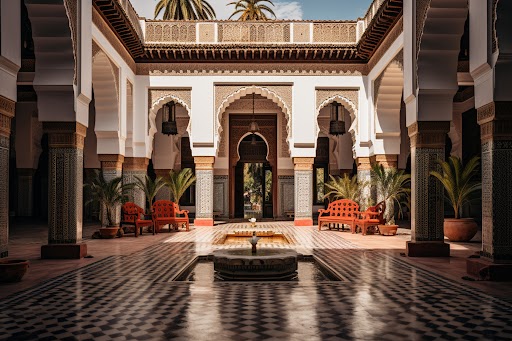
The Bahia Palace is one of the most iconic and visited monuments in Marrakech, Morocco. This 19th-century palace is a testament to Morocco's rich history, architecture, and culture. Its name, which means "Palace of the Beautiful," reflects the majesty of its interiors, courtyards, and gardens. However, for a person in a wheelchair, it is essential to know the details of accessibility and available services to fully enjoy the visit. Below, we provide a comprehensive guide to the Bahia Palace with relevant information for people with reduced mobility.
History and Significance of the Bahia Palace The Bahia Palace was built in the late 19th century by order of Si Moussa, the grand vizier of Sultan Al-Hassan I of Morocco. His son, Bou Ahmed, continued the expansion of the palace, adding courtyards, gardens, and exquisitely decorated rooms. The palace was designed to be the most magnificent of its time, and although it was never completed, it remains a stunning example of Moroccan architecture. Today, the Bahia Palace is a prominent tourist attraction that offers a window into Morocco's imperial past.
Accessibility for People in Wheelchairs The Bahia Palace, despite being a historical structure, has several features that facilitate access for people with reduced mobility. Below are the most relevant aspects of accessibility at the Bahia Palace:
Entrances and Access: The main entrance of the Bahia Palace has a fairly wide access without significant barriers. However, it is important to note that, due to the historic nature of the building, some areas may have high thresholds or steps. There are ramps at certain key points to help visitors in wheelchairs access the most popular areas of the palace.
Courtyards and Gardens: The courtyards are one of the main attractions of the Bahia Palace, especially the Grand Courtyard, which is surrounded by beautiful mosaics, fountains, and gardens. This courtyard is wheelchair accessible thanks to its relatively smooth and wide paths. However, some garden areas have cobblestone paths that can be a bit difficult to navigate. It is advisable to be accompanied for assistance when necessary.
Interiors of the Palace: The interiors of the Bahia Palace, which include halls decorated with intricate stucco details, painted ceilings, and stained glass, are largely accessible for people in wheelchairs. However, some rooms have steps or uneven surfaces, so it may be necessary to plan the route inside the palace in advance to avoid these areas.
Support Staff and Additional Services: The staff at the Bahia Palace are available to assist visitors, especially those who require additional assistance. However, it is recommended to notify in advance if you need specific help so that the staff can be better prepared to assist you.
Additional Services and Suggestions
Best Time to Visit: Marrakech can be extremely hot during the summer, making a visit to the Bahia Palace less comfortable. To avoid the heat and crowds, it is recommended to visit during the fall or spring months, or early in the morning or late in the afternoon.
Avoid Crowds: The Bahia Palace is a very popular destination and can be quite crowded, especially during weekends and holidays. For a quieter and more accessible experience, it is suggested to plan the visit on weekdays and avoid peak hours.
Wheelchairs Available: Wheelchairs are not available for rent at the Bahia Palace, so it is important to bring your own wheelchair if needed. It is also advisable to be accompanied, as some areas of the palace may require additional assistance.
Entrance: The entrance fee to the Bahia Palace is affordable and varies depending on the visitor category:
Adults: 70 MAD (approximately 6.5 EUR)
Children under 12: Free entry
It is recommended to check the updated prices before the visit, as these may be subject to change.
Accessible Restrooms: There are no specifically adapted restrooms for people with reduced mobility within the Bahia Palace. The available restrooms in the complex are small and may not be accessible for all visitors. It is advisable to plan a stop at a nearby location with accessible facilities before or after the visit.
Accessibility:
Getting to the Bahia Palace by public transport is relatively straightforward, and there are several options that allow people in wheelchairs to access comfortably. Here are the transport options:
Bus: There are several bus lines that connect the Bahia Palace with other points in Marrakech. Buses in the city are usually an economical option, but not all are adapted for people in wheelchairs. It is important to check with the bus operator for the availability of accessible services before planning your trip.
Taxi: Taking a taxi is a convenient and comfortable option to reach the Bahia Palace. Taxis in Marrakech are relatively affordable, and most drivers are familiar with the location of the palace. For greater convenience, you can request a taxi adapted for wheelchairs or a larger taxi, especially if you need more space to get in and out of the vehicle. You can also arrange with the driver to wait for you for the return trip.
Address: Rue Riad Zitoun el Jdid, Marrakech 40000, Morocco
Phone: +212 (0)5 24 38 91 79
Koutoubia Minaret
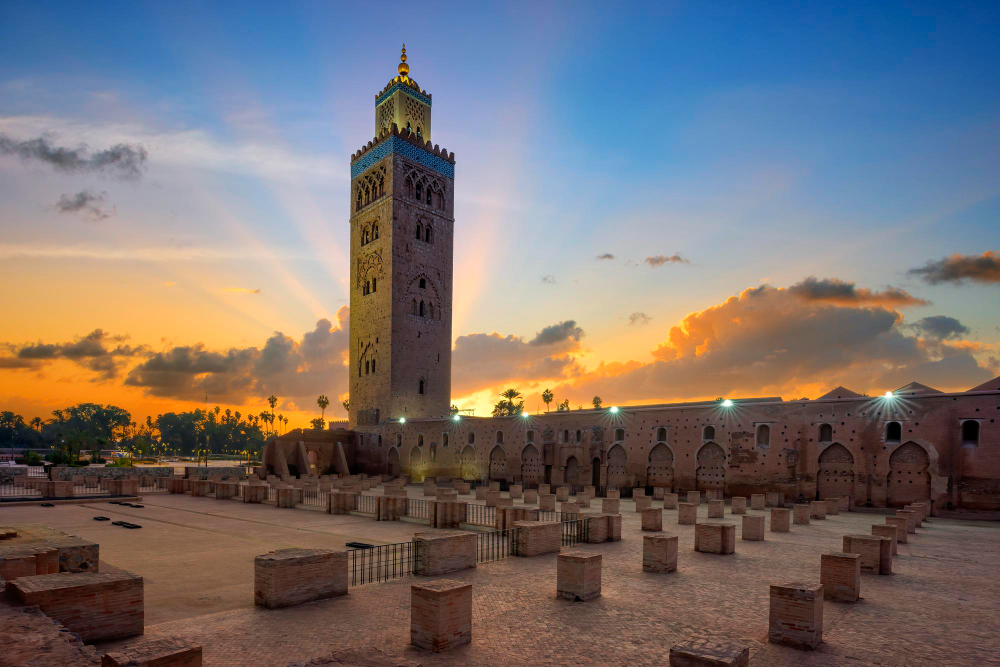
The Koutoubia Mosque is the most famous monument in Marrakech and one of the most recognizable landmarks in Morocco. With its impressive 77-meter-tall minaret, visible from almost any point in the city, the Koutoubia Mosque is an iconic symbol of Marrakech's rich history, culture, and Islamic architecture. Built in the 12th century by the Almohad Caliph Abd al-Mumin, this mosque remains an active place of worship and a tourist attraction that draws visitors from all over the world. Below, we provide a detailed guide to the Koutoubia Mosque, with a special focus on accessibility for people in wheelchairs.
History and Significance of the Koutoubia Mosque The Koutoubia Mosque, also known as the "Mosque of the Booksellers," owes its name to the booksellers who once had their stalls around it. Built between 1147 and 1157, the mosque is one of the most outstanding examples of Almohad architecture, characterized by its large arches, elegant minarets, and geometric details. Its minaret, considered the prototype for the Giralda of Seville and the Hassan Tower in Rabat, has greatly influenced Western Islamic architecture. Although the mosque is a place of worship and non-Muslims are not allowed inside, the exterior area and surrounding gardens are accessible and offer a rich experience in history and culture.
Accessibility for People in Wheelchairs The Koutoubia Mosque and its surroundings have been designed with certain considerations for people with reduced mobility. Below are the most relevant aspects regarding accessibility:
Entrances and Access: The main entrance to the Koutoubia Mosque is accessible for people in wheelchairs. The paths leading to the mosque are wide and relatively flat, making access easy for visitors with reduced mobility. The entrances to the exterior areas, such as the gardens and the surroundings of the mosque, have no significant barriers, allowing hassle-free access.
Paths and Walkways: Around the mosque, there are paved paths that provide comfortable access for people in wheelchairs. The Koutoubia Gardens, which surround the mosque, are also accessible, with wide and smooth paths that facilitate navigation. However, it is important to note that some areas may have small slopes or slightly uneven surfaces, so it is advisable to be accompanied or be prepared to ask for help if necessary.
Minaret Visit: Although the minaret is one of the most prominent features of the Koutoubia Mosque, it is not accessible to visitors, regardless of their mobility capacity. Nevertheless, the minaret can be admired from the outside, and nearby observation points can be accessed to enjoy a magnificent view of it.
Rest Areas: The gardens surrounding the mosque are equipped with benches and rest areas. These areas are easily accessible for people in wheelchairs and provide a comfortable place to relax, enjoy the views, and the tranquility of the surroundings.
Additional Services and Suggestions
Best Time to Visit: Marrakech can be very hot, especially in the summer. For a more comfortable visit, it is recommended to go to the Koutoubia Mosque early in the morning or late in the afternoon when the temperatures are cooler. This is particularly important for people in wheelchairs, as extreme temperatures can make the visit uncomfortable.
Avoid Crowds: The Koutoubia Mosque is one of the most visited places in Marrakech, meaning it can be quite crowded, especially during weekends and holidays. To avoid crowds and enjoy a quieter experience, it is suggested to visit on weekdays.
Wheelchairs Available: Unlike some tourist places that may offer wheelchair rentals, the Koutoubia Mosque does not provide this service. Therefore, it is essential for visitors to bring their own wheelchairs or mobility equipment.
Nearby Activities: The Koutoubia Mosque is located near Jemaa el-Fna Square, a vibrant place full of activities, restaurants, and shops. After visiting the mosque, you can enjoy a stroll through the square, where you will find various food options, crafts, and live entertainment. The square is also quite accessible for people in wheelchairs.
Entry
It is important to note that the Koutoubia Mosque is a place of worship, and as such, entry to the mosque itself is not allowed for non-Muslims. However, the Koutoubia Gardens, which are part of the mosque complex and are open to the public, have no entrance fee.
For Muslims who wish to visit the mosque for prayer, there is no entrance fee. Tourists can enjoy the exteriors, admire the impressive minaret, and stroll through the gardens at no cost.
Accessible Restrooms: The Koutoubia Gardens do not have adapted restrooms for people in wheelchairs. Visitors with reduced mobility should plan their bathroom needs in advance. It is recommended to use the accessible restrooms in nearby restaurants and cafes, which are generally equipped to accommodate people with reduced mobility.
Accessibility:
Getting to the Koutoubia Mosque by public transportation is quite simple, and there are several options available for people in wheelchairs who wish to visit this iconic monument:
Public Buses: Marrakech has a public bus system that connects different parts of the city. Jemaa el-Fna Square, which is just a few minutes' walk from the Koutoubia Mosque, is a major transportation hub. Although public buses in Marrakech are economical, it is important to note that not all buses are adapted for people in wheelchairs. It is recommended to check with the bus operator if the specific vehicle is accessible before planning the trip.
Taxi: Taxis are a popular and convenient option to reach the Koutoubia Mosque. Taxis in Marrakech are relatively affordable, and when taking a taxi, you can ask the driver to drop you off at the nearest and most accessible entrance to the mosque. Additionally, there are larger taxis and some adapted taxi services that can accommodate wheelchairs. It is recommended to negotiate the fare before getting into the taxi to avoid misunderstandings.
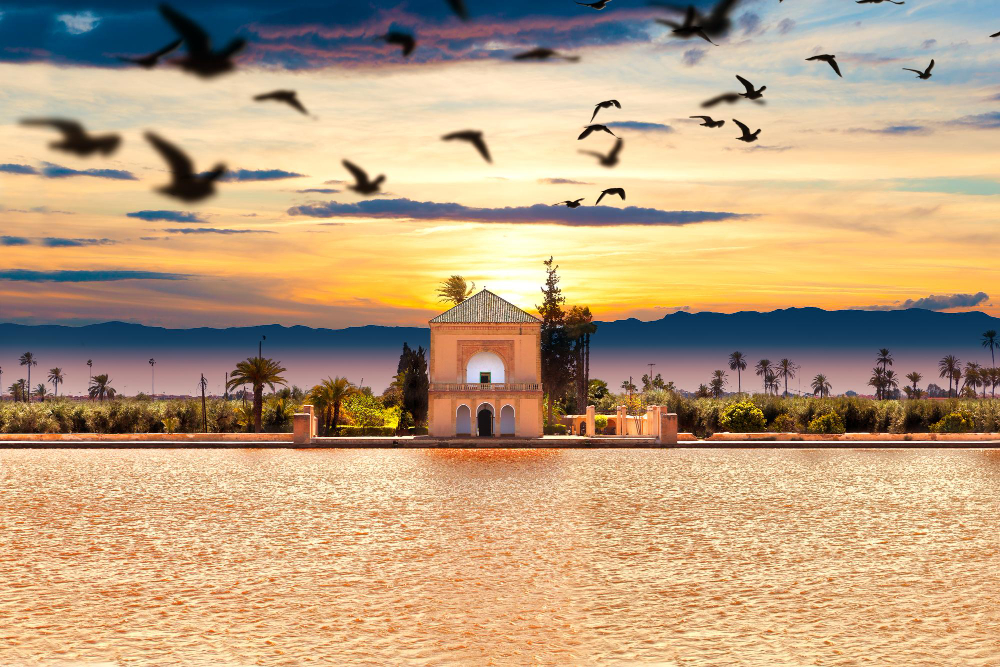
The Menara Gardens are one of the most tranquil and picturesque sites in Marrakech. Located just a few kilometers from the bustling city center, these gardens offer a respite from the frenetic activity and hustle of the medina. With a large pond, a historic pavilion, and stunning views of the Atlas Mountains in the distance, the Menara Gardens are a popular destination for both tourists and locals looking for a place of relaxation and contemplation. Below is a detailed guide to the Menara Gardens with a specific focus on accessibility for people in wheelchairs.
History and Significance of the Menara Gardens The Menara Gardens were built in the 12th century under the reign of the Almohad dynasty. The main purpose of the gardens was to provide a peaceful place for the recreation and relaxation of Marrakech’s rulers, as well as an irrigation system for the surrounding olive groves. The iconic Menara Pavilion, which sits next to a large artificial pond, was added in the 19th century by Sultan Abderrahmane of Morocco. This pavilion not only adds a significant architectural element to the garden but also provides a spectacular view of the Atlas Mountains. Today, the Menara Gardens are one of the most important attractions in Marrakech and offer a unique experience to visitors.
Accessibility for People in Wheelchairs The Menara Gardens are relatively accessible for visitors with reduced mobility. Below are the key aspects of accessibility in the Menara Gardens:
Entrances and Access: The main entrance to the Menara Gardens is accessible for people in wheelchairs. The access is well-leveled, allowing for a hassle-free entry. There are no steps at the entrance, which facilitates mobility for visitors in wheelchairs. However, the entrance to the pavilion has some steps and is not accessible for wheelchairs.
Paths and Walkways: The paths within the Menara Gardens are wide and relatively flat, which makes mobility easier for people in wheelchairs. The paths around the large pond are made of compact gravel, providing a reasonably smooth surface for wheels. While some paths may be slightly uneven, most of the garden is accessible with the help of a companion if needed.
The Menara Pavilion: The pavilion is one of the highlights of the gardens. Although the pavilion itself is not accessible for wheelchairs due to the stairs leading to its interior, it is possible to enjoy its view and architecture from the surrounding areas. The pavilion sits next to the pond, providing a perfect backdrop for photos and moments of contemplation.
Rest Areas and Shade: The Menara Gardens are adorned with olive trees that provide ample shade, which is especially pleasant on hot days. There are benches and rest areas strategically located throughout the garden, many of which are accessible for people in wheelchairs.
Additional Services and Suggestions
Best Time to Visit: Marrakech can be extremely hot during the summer months, so it is recommended to visit the Menara Gardens during the cooler seasons, such as fall or spring, or during the early morning or late afternoon in the summer. This is particularly important for people in wheelchairs who may be more sensitive to high temperatures.
Avoid Crowds: The Menara Gardens are less crowded than other tourist sites in Marrakech, providing a more relaxed and tranquil environment. For an even quieter experience, it is suggested to visit the gardens on weekdays.
Wheelchairs Available: Unlike some tourist places, the Menara Gardens do not offer wheelchair rentals on the premises. Therefore, it is essential for visitors to bring their own wheelchair or mobility equipment. It is also advisable to be accompanied, as some areas may require additional assistance.
Photography and Relaxation: The Menara Gardens are an ideal place for photography, especially with the reflection of the pavilion in the pond and the Atlas Mountains in the background. Visitors in wheelchairs can enjoy these stunning views from the paths around the pond.
Entrance: Access to the Menara Gardens is free for all visitors. This is one of the most appreciated attractions in Marrakech that can be enjoyed without any entrance fee. The fact that there is no entrance fee makes the gardens a popular option for both tourists and locals.
Accessible Restrooms: There are no specifically adapted restrooms within the Menara Gardens. Therefore, visitors with reduced mobility are advised to plan ahead and use accessible restrooms in nearby restaurants or establishments before arriving at the gardens.
Accessibility:
Reaching the Menara Gardens by public transportation is relatively easy, and there are several options available, even for people with reduced mobility:
Public Buses: Marrakech has a bus system that connects various parts of the city, including the Menara Gardens. However, not all buses in Marrakech are adapted for people in wheelchairs, so it may be necessary to check with the operator if the specific bus is accessible before planning the trip.
Taxi: Taking a taxi is a convenient and comfortable option to reach the Menara Gardens. Taxis in Marrakech are affordable, and when taking a taxi, you can ask the driver to drop you off at the nearest and most accessible entrance to the gardens. It is also possible to request a taxi adapted for wheelchairs, which is recommended if you need more space or additional assistance. It is advisable to negotiate the price before starting the journey.
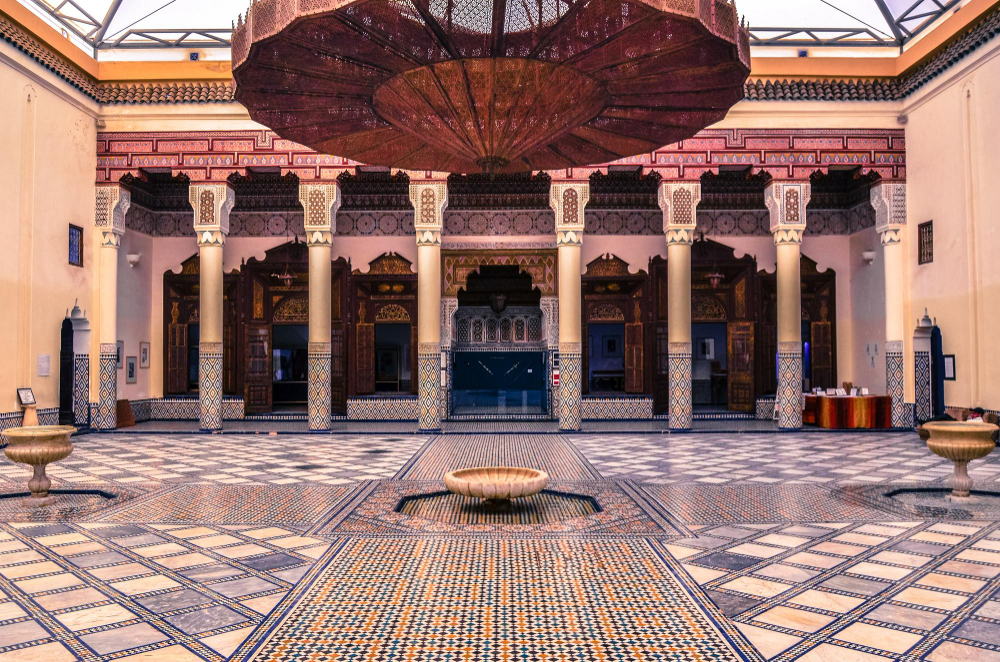
The Museum of Islamic Art in Marrakech is one of the city's most fascinating cultural destinations. Located in the famous Ville Nouvelle of Marrakech, in the same complex as the Majorelle Gardens, this museum is known for its collection of Islamic art, which includes textiles, ceramics, jewelry, and manuscripts that showcase the rich cultural heritage of Morocco and the Islamic world in general. In addition to the beauty of the art on display, the location and design of the museum make it an attractive place for visitors of all ages and interests. This article provides a detailed guide to the Museum of Islamic Art in Marrakech, with a particular focus on accessibility for people in wheelchairs.
History and Significance of the Museum of Islamic Art in Marrakech The Museum of Islamic Art in Marrakech is located in the heart of the Majorelle Gardens, a botanical garden created by French painter Jacques Majorelle in the 1920s. In 1980, the famous fashion designer Yves Saint Laurent and his partner Pierre Bergé bought the gardens and later transformed a villa into the Museum of Islamic Art. The museum opened its doors to the public to house a collection of artifacts including Berber jewelry, ceramics, textiles, weapons, and manuscripts, dating from different periods of Islamic art, from the Almohad era to the Alawite dynasty.
The museum not only offers an aesthetic experience but also provides educational context on the influence of Islamic art in Morocco and the world. With the splendor of the Majorelle Gardens as a backdrop, a visit to the museum becomes a unique experience that combines nature, art, and culture.
Accessibility for People in Wheelchairs The Museum of Islamic Art in Marrakech has made significant efforts to be accessible to people with reduced mobility. Below are the details about accessibility in the museum:
Entrances and Access: The entrance to the museum is accessible for people in wheelchairs. The Majorelle Gardens, where the museum is located, have a separate entrance adapted for people with reduced mobility. Additionally, there are ramps that allow easy access from the entrance to the interior of the museum.
Access to the Interior of the Museum: The museum is situated in a one-story building, making it easy for wheelchair users to access all exhibition areas. The hallways are wide and free of obstacles, allowing comfortable movement through the different sections of the museum. The doors are wide enough for a wheelchair to pass through without difficulty.
Accessible Points of Interest: All areas of the museum, including the exhibition halls showcasing Islamic and Berber art collections, are accessible for people in wheelchairs. The lighting is adequate, and the exhibition labels are placed at a height that allows easy reading from a wheelchair. The information counters are also adapted to an accessible height.
Café and Souvenir Shop: Within the museum complex and the Majorelle Gardens, there is an accessible café and gift shop. The café has ramps and enough space for wheelchairs to move comfortably. The souvenir shop offers a variety of items related to Islamic culture and art and is also wheelchair accessible.
Additional Services and Suggestions
Best Time to Visit: To avoid the extreme heat of Marrakech, it is advisable to visit the Museum of Islamic Art during the cooler seasons, such as fall or spring, or in the early morning or late afternoon during the summer. This is especially important for people in wheelchairs, as it may be more comfortable to explore the museum and gardens during cooler hours.
Avoid Crowds: The museum is a very popular attraction and can be quite crowded, especially during weekends and holidays. For a quieter experience, it is recommended to visit on weekdays.
Advance Reservations: It is advisable to book tickets in advance, especially during peak tourist seasons. This can help avoid long lines and ensures a smooth visit.
Wheelchairs Available: There is no wheelchair rental available at the Museum of Islamic Art, so it is essential for visitors to bring their own wheelchair or mobility equipment.
Entrance: The entrance fee to the Museum of Islamic Art in Marrakech is as follows:
Adults: 70 MAD (approximately 6.5 EUR)
Students: 30 MAD (with valid ID)
Children under 12: Free entry
It is important to note that the entrance to the Museum of Islamic Art also grants access to the Majorelle Gardens. However, there is an additional cost to visit the Berber Museum, which is also located within the gardens complex.
Accessible Restrooms: The Museum of Islamic Art has adapted restrooms for people with reduced mobility. These restrooms are equipped with support bars and enough space to maneuver a wheelchair, ensuring privacy and comfort. The adapted restrooms are located near the museum's main entrance.
Accessibility:
Getting to the Museum of Islamic Art in Marrakech is quite accessible by public transportation, and there are several options for people with reduced mobility:
Public Buses: Marrakech has a bus system that connects several key points of the city, including the Gueliz area, where the Majorelle Gardens are located. Bus lines 1, 4, 15, and 16 have stops near the gardens. Although buses in Marrakech are not always adapted for people in wheelchairs, some newer buses may have ramps. It is recommended to check the accessibility of the buses in advance.
Taxi: Taxis are a popular and convenient option to reach the museum. Taxis in Marrakech are relatively affordable and can drop passengers at the main entrance of the Majorelle Gardens. It is possible to request a larger taxi or a taxi adapted for wheelchairs if necessary. You can also negotiate with the driver to wait for the return trip.
The Secret Garden of Marrakech is an oasis of calm and beauty in the heart of the bustling medina. With a history that goes back over 400 years, this garden has been carefully restored to offer a unique combination of Islamic architecture, traditional landscaping, and tranquility amidst the city's hustle and bustle. Located in the Mouassine district, near the famous Jemaa el-Fna Square, the Secret Garden is a must-visit for those seeking a serene retreat. This guide focuses on the accessibility of the Secret Garden for people in wheelchairs, providing details on access, services, transportation, and other relevant information.
History and Significance of the Secret Garden The Secret Garden, as we know it today, was built in the second half of the 19th century, although its origins date back to the Saadian dynasty in the 16th century. This historic garden was restored in 2016 and has regained its original splendor. It is divided into two main parts: the Exotic Garden and the Islamic Garden. The Islamic Garden reflects the principles of Muslim garden design, with fountains, water channels, and carefully selected plants that symbolize the Islamic paradise. On the other hand, the Exotic Garden offers a diverse collection of plants from around the world, creating a charming contrast with its Islamic counterpart.
The site is not only a garden but also houses a panoramic tower, an ancient hammam, a library, and a gift shop, making it an ideal place to explore and learn about the culture and history of Marrakech. Additionally, the Secret Garden is an excellent example of how traditional elements can be integrated into a contemporary setting.
Accessibility for People in Wheelchairs The Secret Garden has been restored with accessibility in mind, and most of its facilities are designed to be inclusive for all people, including those who use wheelchairs. Below are the most relevant aspects of accessibility in the Secret Garden:
Entrances and Access: The main entrance to the Secret Garden is accessible for people in wheelchairs. There is a ramp at the entrance that allows easy and barrier-free access to the garden. The doors are wide enough for wheelchairs to pass through without any issues, and staff are available to assist if needed.
Paths and Walkways: Inside the garden, the paths are paved and wide and smooth enough to allow comfortable wheelchair movement. Both the Islamic Garden and the Exotic Garden are mostly accessible, and visitors can enjoy the natural surroundings, fountains, and vegetation without significant obstacles. While some areas may have small slopes or inclines, these are well-marked and manageable with the help of a companion.
Accessible Points of Interest: All the main areas of interest, such as the library, gift shop, and rest areas, are accessible for people in wheelchairs. However, the panoramic tower, which offers stunning views of the medina, is not accessible due to the staircase leading to the top. Despite this, there are many accessible areas from which visitors can enjoy the garden's beauty and surroundings.
Café and Restaurant: The Secret Garden has a café and restaurant that are accessible for people with reduced mobility. The café offers a peaceful atmosphere to relax with a drink or snack while enjoying views of the garden. The tables and chairs are arranged in a way that facilitates wheelchair movement.
Additional Services and Suggestions
Best Time to Visit: Marrakech can be very hot during the summer, so it is suggested to visit the Secret Garden during cooler seasons such as fall or spring. It is also ideal to visit early in the morning or late in the afternoon to avoid intense heat.
Avoid Crowds: The Secret Garden is a popular spot among tourists and locals, especially during weekends and holidays. To enjoy a quieter experience, it is recommended to visit on weekdays.
Advance Reservations: Although not strictly necessary, making an advance reservation can be helpful during peak seasons to avoid long lines and ensure a hassle-free visit.
Wheelchairs Available: There are no wheelchairs available for rent at the Secret Garden, so it is essential for visitors to bring their own wheelchair or mobility equipment.
Activities and Events: The Secret Garden also hosts special events, such as art exhibitions and cultural activities. Be sure to check the events calendar before your visit to make the most of your experience.
Entrance Fees:
Adults: 80 MAD (approximately 7.5 EUR)
Students: 60 MAD (with valid ID)
Children under 12: Free entry
These prices include access to all areas of the garden and facilities, except the panoramic tower. It is advisable to check the updated prices before visiting, as these may change over time.
Accessible Restrooms: The Secret Garden is equipped with accessible restrooms for people in wheelchairs. These restrooms are located near the main entrance and are equipped with support bars and sufficient space to maneuver a wheelchair, providing comfort and privacy.
Accessibility:
The Secret Garden is located in the heart of the Marrakech medina, so getting there by public transportation can be a convenient option. Below are the most accessible transportation options for people in wheelchairs:
Public Buses: Marrakech has a bus system that connects various parts of the city. Although buses are an economical option, not all are adapted for people in wheelchairs. Jemaa el-Fna Square, which is within walking distance of the Secret Garden, is an important connection point. It is advisable to check the accessibility of the buses before planning your trip.
Taxi: Taking a taxi is one of the most practical and comfortable ways to reach the Secret Garden. Taxis in Marrakech are quite affordable and can drop you off as close as possible to the garden's entrance. Some larger or wheelchair-adapted taxis are available upon request. Be sure to negotiate the fare before getting into the taxi.
Marrakech, conhecida como a "Pérola do Sul" do Marrocos, é uma cidade vibrante, cheia de história, cultura e cor. Localizada aos pés das Montanhas Atlas, foi por séculos um importante centro comercial, religioso e cultural. A cidade é famosa pelos seus souks animados, palácios majestosos, jardins exuberantes e pela medina reconhecida como Patrimônio Mundial da UNESCO. Para quem viaja em cadeira de rodas, Marrakech pode trazer desafios, mas com planejamento e informação correta você consegue aproveitar uma experiência inesquecível.
Marrakech foi fundada em 1070 pelos Almorávidas e rapidamente se tornou um centro político e econômico de referência. Ao longo dos séculos, foi capital de diferentes dinastias marroquinas, incluindo Almóadas e Saadianos. No período saadiano, entre os séculos XVI e XVII, a cidade viveu um renascimento cultural e arquitetônico. Monumentos como o Palácio da Bahia, os Jardins da Menara e os Túmulos Saadianos ainda refletem esse legado.
Em termos de acessibilidade, a medina histórica continua sendo a área mais desafiadora por causa das ruas estreitas, do piso irregular e do grande fluxo de pessoas. Mesmo assim, várias áreas da cidade vêm sendo adaptadas e já existem rotas mais confortáveis para visitantes com mobilidade reduzida.
Medina de Marrakech:
A medina é o coração da cidade, com mercados tradicionais, riads, mesquitas e praças históricas. É uma visita essencial, mas o ideal é fazer o passeio com guia local e em horários de menor movimento.
Jardins e espaços abertos:
Marrakech tem jardins tranquilos que oferecem uma pausa do ritmo intenso da medina. Muitos desses espaços já contam com melhores condições de acessibilidade.
Jardim Majorelle:
Um dos lugares mais icônicos da cidade, conhecido pelo azul intenso, pelas plantas exóticas e pela ligação com Yves Saint Laurent.
Acessibilidade: Percursos relativamente planos, algumas rampas e banheiro acessível.
Jardins da Menara:
Nos arredores da cidade, com um grande lago central, oliveiras e vista para o Atlas.
Acessibilidade: Parte do trajeto é acessível, embora existam áreas com piso irregular.
Le Jardin Secret:
No centro da medina, combina arquitetura islâmica e jardins botânicos.
Acessibilidade: Acesso parcial com rampas em algumas áreas.
Praça Jemaa el-Fna e encantadores de serpentes:
A praça Jemaa el-Fna é um dos pontos mais emblemáticos de Marrakech, com contadores de histórias, músicos, acrobatas e barracas de comida. O ambiente é único, mas pode ser exigente para usuários de cadeira de rodas por causa da multidão e do ruído.
Curiosidades sobre Marrakech:
Cidade Vermelha: O tom avermelhado das muralhas e construções da medina vem de materiais locais como argila e terra.
Origem do nome: O nome Marrakech é associado ao berbere e à ideia de "Terra de Deus".
Palmeraie: Nos arredores existe uma ampla área de palmeiras com resorts, campos de golfe e atividades adaptadas.
Hammam: Alguns hammams modernos, principalmente em hotéis e spas, já oferecem estruturas mais acessíveis.
Recomendações gerais para viajar em cadeira de rodas em Marrakech:
Planejamento antecipado:
Faça reservas com antecedência e confirme os acessos antes dos passeios.
Transporte privado adaptado:
Nem todas as opções públicas são acessíveis; o transporte adaptado melhora muito a experiência.
Guia local com experiência em acessibilidade:
Ajuda você a evitar áreas difíceis e a escolher rotas mais confortáveis.
Mapas e recursos de acessibilidade:
Use aplicativos e mapas com dados sobre rampas, banheiros acessíveis e pisos regulares.
Segurança:
Evite horários de pico, mantenha seus pertences protegidos e fique atento ao entorno.
Conclusão:
Marrakech é uma cidade intensa e fascinante. Mesmo com os desafios naturais da infraestrutura histórica, existem soluções para que visitantes com mobilidade reduzida aproveitem com conforto: planejamento, transporte adaptado, apoio local e escolha de rotas adequadas. Entre jardins, palácios, souks e gastronomia, Marrakech oferece uma viagem rica e memorável.
Posto de turismo de Marrakech
Marrakech é uma das cidades mais visitadas do Marrocos e conta com vários postos de turismo úteis para quem busca mapas, recomendações e apoio para organizar passeios. Para viajantes com mobilidade reduzida, esses postos podem ser decisivos para identificar rotas, transportes e serviços mais acessíveis.
Centro de Informação Turística - Posto principal de Marrakech Localizado perto da Praça Jemaa el-Fna, é referência para quem chega à cidade e quer orientação inicial.
Horário: segunda a sábado, 9:00-18:00. Fechado aos domingos.
Serviços: mapas, folhetos, recomendações de restaurantes/hotéis, reservas de passeios e apoio em transporte local.
Acessibilidade:
Entrada acessível: em nível e sem degraus relevantes.
Interior acessível: espaço amplo e balcões em altura adequada.
Banheiro acessível: disponível no interior.
Endereço e contato:
Endereço: Rue Moulay Ismail, Jemaa el-Fna Square, Marrakech 40000, Morocco.
Entre em contato com os postos antes da chegada: Ajuda a confirmar acessibilidade e apoio personalizado.
Peça guias com experiência em mobilidade reduzida: Fundamental para medina e áreas históricas.
Confirme horários e eventos: Ajuda você a evitar períodos de maior movimento.
Solicite apoio para transporte adaptado: Inclui táxis adaptados e veículos com motorista.
Marrakech City Pass:
O Marrakech City Pass permite acessar várias atrações com um único passe e, em alguns casos, inclui benefícios de transporte e descontos comerciais.
Principais benefícios:
Acesso a atrações: Majorelle Garden, Bahia Palace, El Badi Palace, Marrakech Museum, Saadian Tombs, Yves Saint Laurent Museum, Marrakech Photography Museum e House of Photography of Marrakech.
Transporte incluído (conforme modalidade): uso de determinadas linhas e serviços turísticos.
Descontos: restaurantes, lojas e atividades selecionadas.
Fast track: acesso mais rápido em alguns locais.
Passeios e excursões: condições especiais em atividades guiadas.
Guia e mapas: material informativo com recomendações.
Modalidades e preços aproximados:
24 horas: 30-35 EUR
48 horas: 45-50 EUR
72 horas: 60-65 EUR
5 dias: 80-90 EUR
Onde comprar:
Postos de turismo: Jemaa el-Fna, estação de trem e aeroporto.
Online: plataformas oficiais e parceiros de viagem.
Hotéis e riads: alguns vendem o passe na recepção.
Pontos autorizados: agências e quiosques selecionados.
Acessibilidade nas atrações incluídas:
Majorelle Garden: acessível.
Bahia Palace: parcialmente acessível.
Marrakech Museum: acesso limitado em algumas áreas.
El Badi Palace: acessibilidade parcial.
Saadian Tombs: acesso limitado.
Yves Saint Laurent Museum: acessível, com elevadores e banheiro adaptado.
Transportes turísticos incluídos: geralmente com rampas e assentos reservados.
Como usar:
Ativação: na primeira utilização.
Atrações: apresente o passe na entrada.
Transporte: mostre o passe ao motorista ou no acesso ao serviço.
Transporte
Aeroporto:
O Aeroporto Internacional de Marrakech-Menara (RAK) é uma das principais portas de entrada do Marrocos e recebe milhões de passageiros por ano. Para pessoas com mobilidade reduzida, oferece serviços de assistência e estruturas adaptadas.
Informações gerais do Aeroporto Internacional de Marrakech-Menara (RAK)
Endereço: Mhamid Saada 6, Marrakech 40000, Morocco
Existem pontos de assistência PMR sinalizados nas áreas de partidas e chegadas, perto da entrada principal, balcões de check-in, portões de chegada e área de bagagens. As equipes locais auxiliam no embarque, desembarque e circulação interna.
Solicitação de assistência
Para garantir atendimento adequado, a assistência deve ser solicitada com pelo menos 48 horas de antecedência, normalmente por meio da companhia aérea.
Como solicitar:
Informe a necessidade durante a reserva do voo.
Ou entre em contato direto com o aeroporto com antecedência mínima de 48 horas.
Taxi Vert MarrakechTelefone: (+212) 524 40 94 40 Email:[email protected]
Outras opções
Ônibus turísticos adaptados: com rampas e espaços dedicados.
Aluguel de veículo adaptado com motorista: solução privada e flexível para meio dia ou dia completo.
Tuk-tuks elétricos adaptados: em áreas centrais, úteis para trajetos curtos.
Bairros / Áreas
A Medina de Marrakech é o coração histórico da cidade e reúne patrimônio, cultura e vida local intensa. Como Patrimônio Mundial da UNESCO, tem ruas estreitas e piso em alguns trechos irregulares. Mesmo assim, com planejamento adequado, você pode fazer um roteiro acessível pela manhã em alguns dos pontos mais emblemáticos.
Roteiro acessível pela Medina (manhã):
Ponto de partida: Praça Jemaa el-Fna
A praça é ampla e, em várias áreas, relativamente plana, permitindo deslocamento com mais conforto. No começo da manhã há menos movimento, o que facilita o passeio.
1) Mesquita Koutoubia e jardins ao redor
A área externa da Koutoubia é acessível e os jardins ao lado têm caminhos mais regulares para caminhar e descansar.
2) Souks principais com apoio local
Mesmo que muitos becos sejam estreitos, alguns eixos principais, como o Souk Semmarine, permitem visita mais confortável. O ideal é ter acompanhamento de guia local para evitar trechos com mais irregularidade.
3) Palácio da Bahia
Um dos monumentos mais impressionantes de Marrakech, com várias áreas no mesmo nível e acesso facilitado em parte do percurso. Os pátios e jardins são destaques da visita.
4) Museu de Marrakech
Instalado no antigo Dar Mnebhi, reúne exposições de arte e patrimônio marroquino. Parte dos espaços tem acesso por rampas suaves e circulação possível em cadeira de rodas.
5) Túmulos Saadianos
Acessibilidade parcial, com áreas visitáveis no nível térreo e alguns pontos com limitações. Vale a visita pela riqueza decorativa e pelo contexto histórico.
Recomendações para o roteiro:
Contrate guia local especializado:
Ajuda você a escolher ruas mais acessíveis e horários melhores.
Comece cedo:
Menos multidão e temperatura mais agradável.
Use mapa acessível:
Aplicativos com rotas e pontos de apoio economizam tempo e esforço.
Atenção ao piso:
Considere trechos de calçamento antigo e inclinações pontuais.
Faça pausas regulares:
Aproveite pátios, jardins e terraços para descanso e hidratação.
Restaurantes adaptados
Aqui estão três restaurantes em Marrakech com boas condições de acessibilidade para usuários de cadeira de rodas, com informações de contato e sugestão de prato principal.
Nomad Localizado no coração da medina, perto da Praça Jemaa el-Fna, o Nomad combina culinária marroquina contemporânea com ambiente moderno. É conhecido pelo terraço com vista para a cidade e por uma proposta gastronômica que une tradição e inovação.
Em acessibilidade, oferece entrada sem degraus e elevador para os andares superiores. Há banheiros adaptados para pessoas com mobilidade reduzida.
Prato destaque: Tajine de cordeiro com pera e açafrão.
Café des Épices Situado na praça Rahba Kedima, este café-restaurante é muito procurado pela vista panorâmica e pela localização central na medina. Combina pratos marroquinos e internacionais em ambiente descontraído.
Tem acesso plano na entrada e elevador entre andares, facilitando o acesso às áreas de terraço. Conta com banheiro adaptado.
Prato destaque: Cuscuz de frango com legumes frescos.
Al Fassia Referência gastronômica em Marrakech, especialmente reconhecida pela cozinha tradicional marroquina e pela equipe feminina. Localizado em Gueliz, oferece ambiente mais tranquilo e elegante.
A entrada é ampla e em nível, com espaço adequado para manobra de cadeira de rodas. Há banheiros adaptados.