Travelling by plane can be challenging for people with reduced mobility, particularly when an electric wheelchair needs to be transported. However, airlines are required to carry these devices provided that they meet certain requirements. This article discusses the regulations and recommendations for travelling with electric wheelchairs and mobility scooters.
Regulations and recommendations for electric wheelchairs
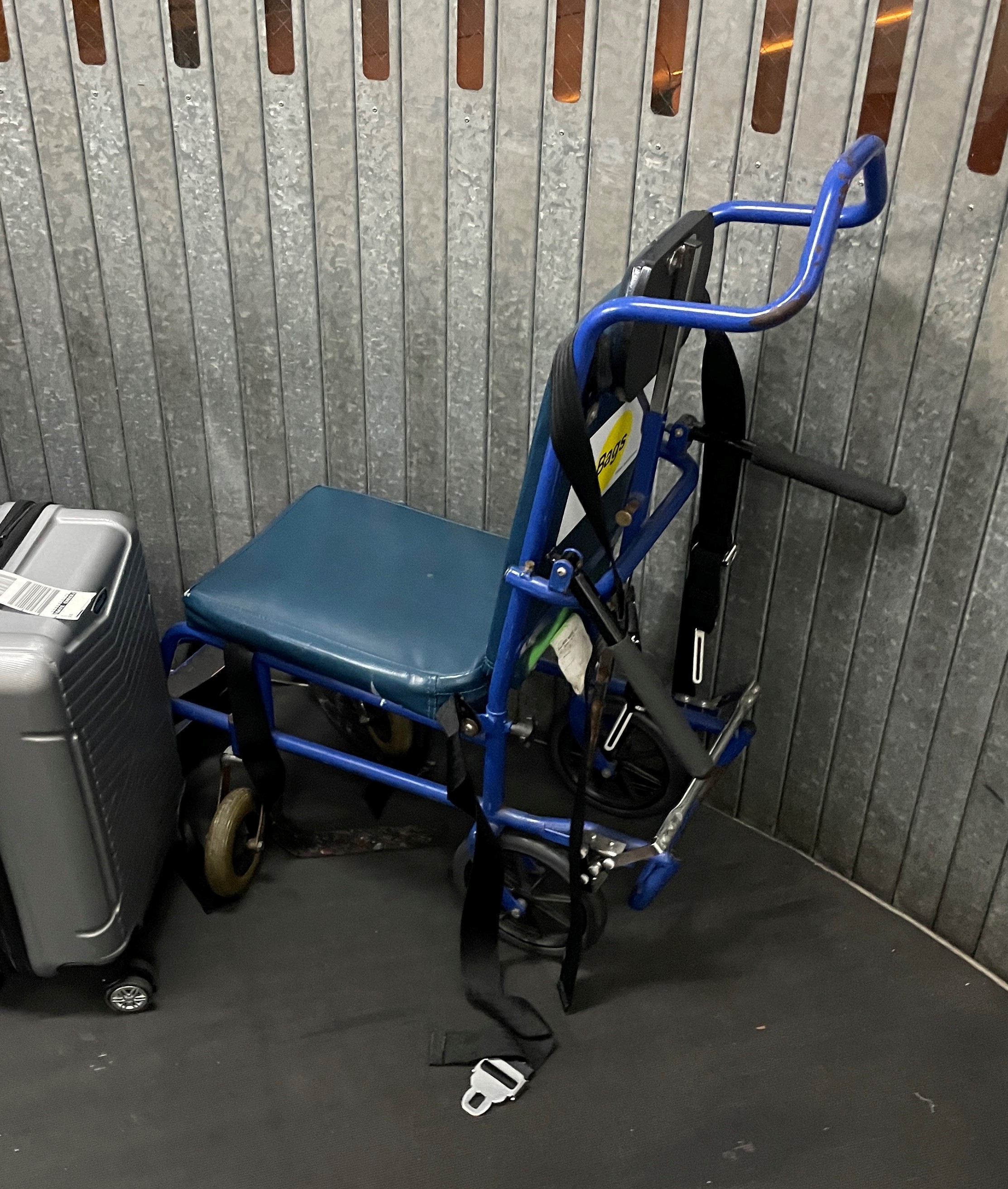
Airlines must carry your wheelchair provided that it fits in the aircraft hold, either as checked baggage or, where possible, in the cabin. However, you cannot use your personal wheelchair to reach your seat on the aircraft. For this purpose, airlines provide a special onboard aisle chair designed to move through the aisle and allow access to the seat. The same chair may also be used to reach the toilet during the flight if necessary.
Electric wheelchairs, mobility scooters and other battery-powered mobility aids are classified according to the type of battery they use:
- Non-spillable wet batteries: These batteries are designed to prevent leakage and are suitable for air travel. They must remain fitted to the wheelchair and be properly secured in the aircraft hold.
- Nickel-metal hydride batteries or dry batteries: These are also suitable for air travel and, like non-spillable wet batteries, must remain fitted to the wheelchair during the flight and be securely fastened.
- Sealed lead-acid batteries, AGM batteries and gel batteries: These are the most common batteries in electric wheelchairs. They are suitable for air travel and must remain fitted to the wheelchair in the aircraft hold, ensuring that they are properly secured.
Lithium-ion batteries, which are less common, must be removed from the wheelchair and carried in the cabin as hand luggage. This is due to safety regulations concerning lithium batteries during flights, as they pose a greater fire risk if not handled correctly.
Travelling with mobility scooters
As with electric wheelchairs, airlines are required to carry mobility scooters. The regulations and recommendations for transporting these devices are similar to those described above for electric wheelchairs.
Mobility scooters also use different types of batteries, and their classification and handling during air transport follow the same guidance:
- Non-spillable wet batteries: These remain fitted to the scooter and must be securely fastened in the aircraft hold.
- Nickel-metal hydride batteries or dry batteries: These batteries may also remain fitted to the scooter and must be properly secured.
- Sealed lead-acid batteries, AGM batteries and gel batteries: Commonly used in mobility scooters, these must remain fitted to the equipment and be securely fastened.
- Lithium-ion batteries: These must be removed from the scooter and carried in the cabin as hand luggage.
Additional tips for travelling with electric wheelchairs and mobility scooters
- Advance notice: It is essential to inform the airline that you need to transport an electric wheelchair or mobility scooter when booking and again before the flight. This helps ensure that the airline is prepared to handle your mobility equipment correctly.
- Documentation and labelling: Provide detailed information about the battery specifications and the model of your wheelchair or scooter. Label your equipment clearly to avoid confusion during handling and storage.
- Security screening: Arrive at the airport with sufficient time to allow for any additional inspection of your mobility equipment. Airport security staff may require extra time to inspect and authorise the transport of batteries and electronic devices.
- Maintenance and preparation: Make sure that your wheelchair or scooter is in good working order before the journey. Carry out any necessary maintenance to avoid problems during transport.
In conclusion, travelling with an electric wheelchair or mobility scooter is possible and is covered by airline regulations. By following the recommendations and communicating properly with the airline, you can help ensure a safe and trouble-free journey.