Traveling to Rotterdam means discovering a modern, vibrant city with a unique personality. Unlike other Dutch cities with medieval layouts, Rotterdam was reborn after World War II with bold urban planning, glass skyscrapers, and cutting-edge architecture that have turned it into a laboratory of creativity. It is home to the largest port in Europe, world-class museums, multicultural neighborhoods, and a buzzing cultural life.
The best part is that Rotterdam is very accessible for wheelchair and mobility scooter users. With wide streets, step-free transport, and inclusive public spaces, exploring the city is both comfortable and exciting.
A Brief History of Rotterdam
Rotterdam’s origins date back to the 13th century, when a dam (“dam”) was built across the River Rotte—hence the name. For centuries, the city thrived as a trading port thanks to its strategic position on the Rhine-Meuse delta.
World War II marked a turning point: in 1940, much of the historic center was destroyed during bombing raids. Instead of rebuilding as before, Rotterdam embraced modernity and innovation. Today it is celebrated as the “city of architecture” in the Netherlands.
Fun fact: in 1962 Rotterdam became the largest port in the world, a title it held for more than 40 years. Although Shanghai later took the lead, Rotterdam remains Europe’s busiest and most important port.
Accessibility in Rotterdam
Rotterdam is one of the most accessible cities in the Netherlands, thanks to its modern layout:
- Streets and sidewalks: wide, flat, and equipped with curb ramps at crossings.
- Public transport: trams, buses, and metro have low-floor access and wheelchair-friendly platforms.
- Boats and ferries: many river services offer ramp access.
- Hotels and restaurants: most modern facilities follow European accessibility standards.
- Museums and attractions: major cultural venues have elevators, ramps, and accessible restrooms.
Things to See and Do in Rotterdam
1. Cube Houses (Kubuswoningen)
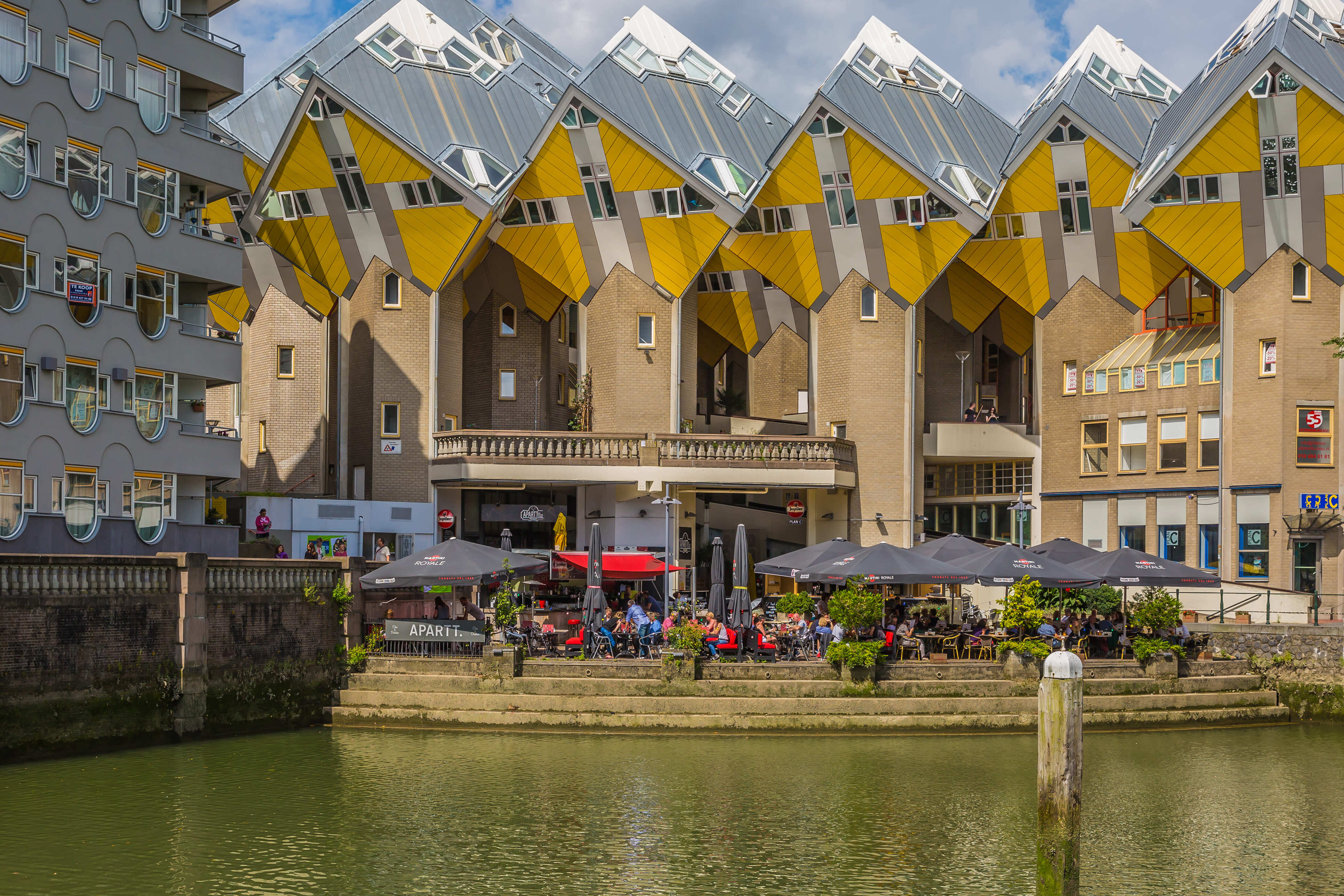
Designed by Piet Blom in the 1980s, these tilted yellow cube houses are one of the city’s icons. One is open as a museum, though the interiors can be narrow; the surrounding area, however, is fully wheelchair accessible.
2. Markthal
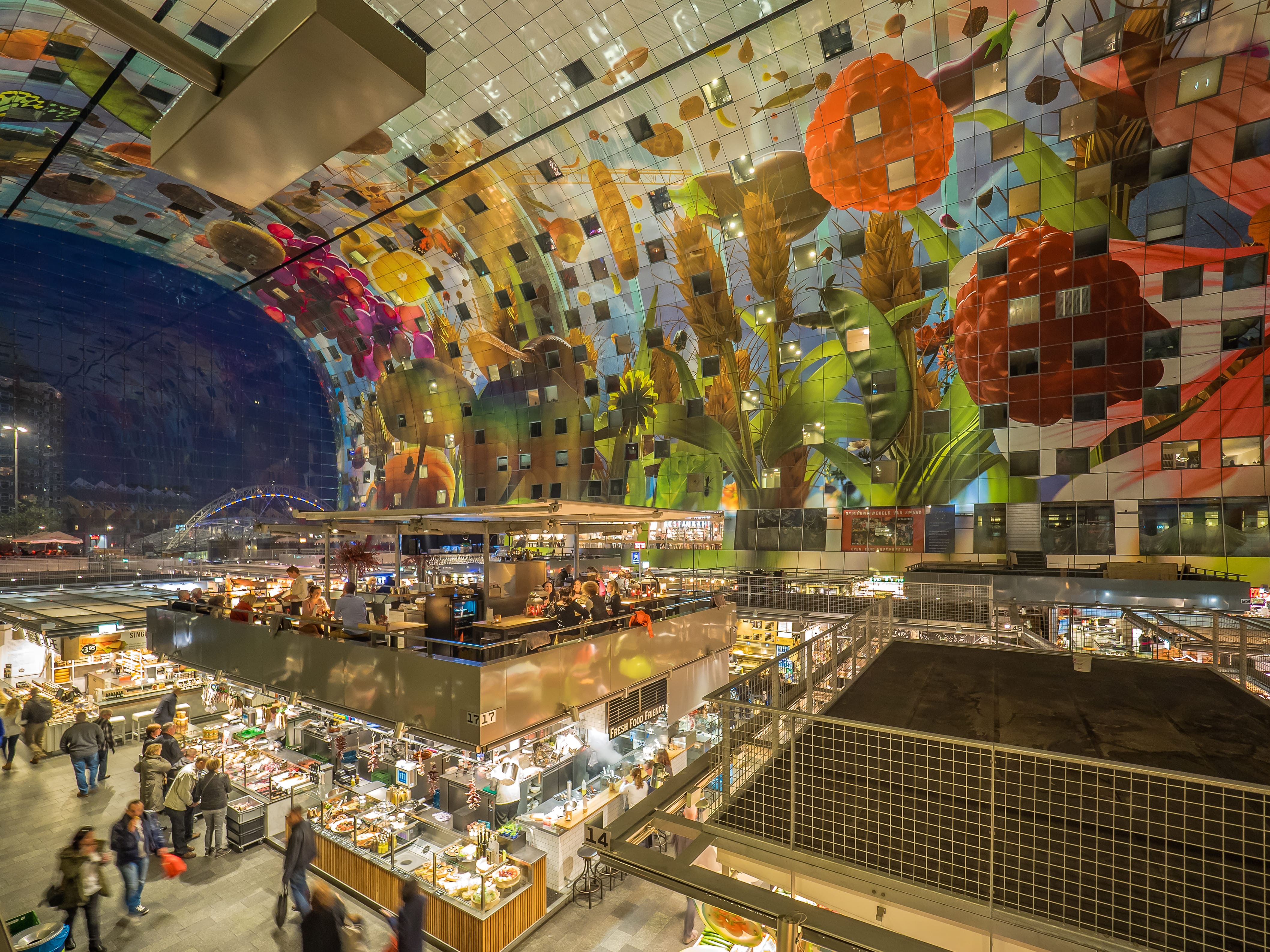
This spectacular market hall, shaped like a giant arch, has a ceiling covered with a colorful mural of fruits and flowers. Inside you’ll find food stalls, shops, and restaurants—all spacious and fully accessible.
3. Erasmus Bridge (Erasmusbrug)
Known as “The Swan,” this futuristic bridge connects north and south Rotterdam. It’s a smooth, step-free route and a must-see at night when it’s beautifully lit, offering views of the skyline.
4. Port of Rotterdam
Europe’s largest port can be explored on accessible boat tours, where you’ll see massive container ships, cranes, and terminals in action.
5. Depot Boijmans Van Beuningen
This futuristic mirrored bowl-shaped building houses the Boijmans collection. It is fully wheelchair accessible and offers panoramic views from its elevators and rooftop.
6. Euromast Tower
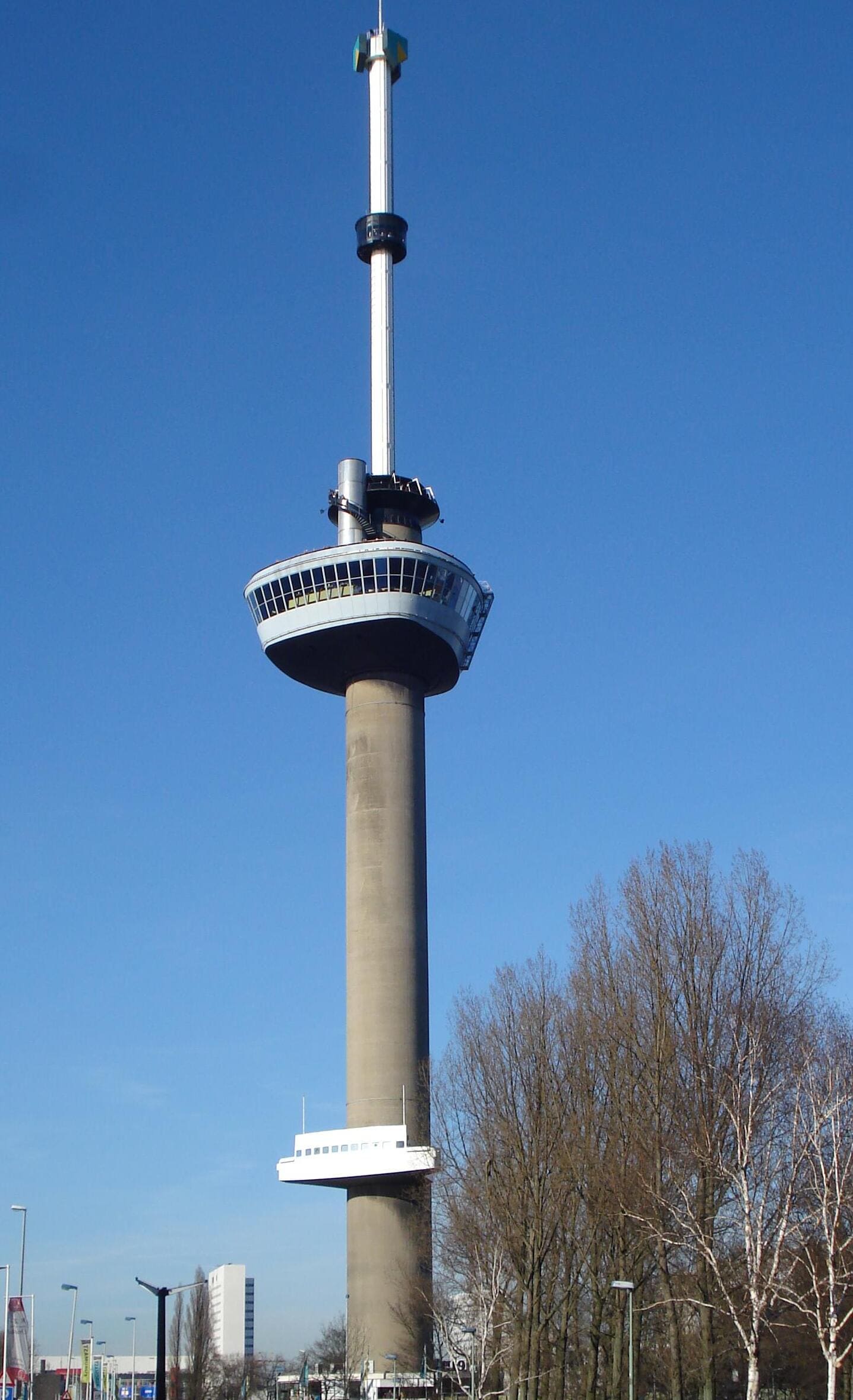
At 185 meters, the Euromast is the tallest tower in the Netherlands. A panoramic elevator takes visitors to the viewing platform, which is fully accessible for wheelchairs.
7. Delfshaven
One of the few historic areas that survived WWII bombings, with canals, windmills, and old houses. The quays and walkways along the water are largely accessible.
8. Maritime Museum
A fascinating museum celebrating Rotterdam’s naval history. Accessible ramps, elevators, and pathways allow everyone to enjoy the exhibits and outdoor ship displays.
Unique Experiences
Adaptive bike tours: Rotterdam is a cycling city, and several services provide adapted electric bikes and tricycles.
Architectural sightseeing: from the striking Central Station to Rem Koolhaas’s De Rotterdam building, the city is a living museum of contemporary design.
Festivals and events: the International Film Festival, North Sea Jazz Festival, and Carnival bring the city alive with music, cinema, and culture—all in accessible venues.
Practical Tips for Wheelchair or Scooter Travelers
- Plan ahead: Rotterdam is flat, making it ideal for mobility scooters and wheelchairs.
- Public transport: get an OV-chipkaart to use trams, buses, metro, and trains—all accessible.
- Nearby trips: accessible trains make it easy to visit Amsterdam, Delft, or The Hague.
- Weather: pack a light raincoat—the Dutch weather is famously unpredictable.
Fun Fact
In 1970, British rock band The Who planned to record their legendary Live at Leeds album in Rotterdam. Technical issues forced a last-minute change, but the city retained its reputation as a great live music destination, hosting major concerts and festivals to this day.
Conclusion
Rotterdam is a modern, accessible, and dynamic city. Unlike Amsterdam, it has a futuristic skyline and bold architecture, while still offering charming historic corners like Delfshaven.
For wheelchair and scooter users, it’s easy to get around, thanks to flat streets, adapted transport, and inclusive attractions. From panoramic views at the Euromast and architectural wonders like the Cube Houses to the energy of its port and the flavors of the Markthal, Rotterdam is a destination that blends history, culture, and innovation in an accessible and fascinating way.
With the goal of offering the highest level of service to all its visitors, including those with reduced mobility, the city of Rotterdam has established several tourist information offices and service points across the city. These offices provide personalized guidance, detailed maps, and up-to-date information on cultural events, transportation, accessible routes, and inclusive services.
Each office is equipped to meet the needs of travelers requiring additional support, ensuring a comfortable, safe, and enriching stay in the Netherlands’ most modern city.
Main Tourist Information Offices in Rotterdam
1. Rotterdam Central Station Tourist Information
Address: Stationsplein 1, 3013 AJ Rotterdam
Telephone: (+31) 10 790 0185
Email: [email protected]
Located inside the city’s main transport hub, this office is the primary reference point for visitors arriving by train, metro, tram, or bus. It provides comprehensive information on accessible cultural venues, barrier-free hotels and restaurants, and adapted public transport. The building is step-free, with automatic doors, tactile signage, and trained staff to assist visitors with reduced mobility or sensory impairments.
2. Coolsingel Tourist Information Office (City Center)
Address: Coolsingel 114, 3011 AG Rotterdam
Telephone: (+31) 10 790 0185
Email: [email protected]
Situated in the heart of downtown Rotterdam, near the Stadhuis (City Hall), this office is ideal for visitors exploring the city center. It provides guidance on accessible walking routes to attractions such as the Markthal, Cube Houses, and Erasmus Bridge. Facilities include lowered counters for wheelchair users, accessible restrooms, and induction loop systems for visitors with hearing aids.
3. Rotterdam Tourist Information at Hoek van Holland
Address: Stationsweg 11, 3151 HR Hoek van Holland
Telephone: (+31) 174 389 111
Email: [email protected]
Located near Rotterdam’s seaside district, this office specializes in providing information for visitors wishing to explore the coast and beaches. Accessibility advice includes details on adapted transport connections, beach wheelchairs available in summer, and barrier-free access to the promenade and local restaurants.
Tourist Passes and Accessible Transport Options
While Rotterdam does not offer a city-only tourist card, visitors can benefit from regional passes that include transportation and attractions with accessibility in mind:
- Rotterdam Welcome Card
Offers discounts on attractions, museums, and restaurants, as well as unlimited travel on RET trams, buses, and metro. Available in 1, 2, or 3-day formats, priced from approximately €12.50 to €21.50. RET vehicles are fully accessible. - Holland Travel Ticket
A convenient one-day ticket valid on all public transport in the Netherlands (trains, buses, trams, and metro), priced at €48. This includes NS trains, most of which are equipped with wheelchair ramps and step-free boarding platforms. - Waterbus (Rotterdam–Kinderdijk–Dordrecht)
A popular sightseeing option connecting Rotterdam with surrounding towns and the UNESCO Kinderdijk windmills. Many Waterbus vessels are adapted with ramps and accessible seating. - Hop-On Hop-Off Sightseeing Bus
Offers panoramic tours of Rotterdam with stops at major attractions. The lower deck is accessible for wheelchair users. Tickets cost around €20–25 per day.
Commitment to Accessibility
All tourist information offices in Rotterdam operate under the same guiding principle: ensuring equal access to information, services, and facilities for every visitor. Staff are trained in accessibility awareness and multilingual communication, guaranteeing that every traveler feels welcome and supported.
From the moment of arrival, travelers with reduced mobility benefit from barrier-free routes, adapted transport, and accessible accommodations. Whether you are visiting Rotterdam’s iconic skyline, exploring the Markthal, or enjoying a cruise through the port, you will find that the city combines modern design with a strong commitment to inclusive tourism.
Airport
The city of Rotterdam is served by Rotterdam The Hague Airport (RTM), located only 7 kilometers from the city center. It is the third busiest airport in the Netherlands, offering mainly European and seasonal international flights.
For long-haul destinations, many travelers use Amsterdam Schiphol Airport (AMS), situated about 60 kilometers away and directly connected to Rotterdam by high-speed train in under 30 minutes.
In accordance with Regulation (EC) No 1107/2006 of the European Parliament, both airports provide free assistance services for Passengers with Reduced Mobility (PRM), available from arrival at the terminal through boarding and, in reverse, from disembarkation until departure. Requests must be made at least 48 hours in advance:
Rotterdam The Hague Airport: www.rotterdamthehagueairport.nl
Amsterdam Schiphol Airport: www.schiphol.nl
- Rotterdam The Hague Airport offers:
- Fully accessible entrances, pathways, ramps, and lifts.
- Adapted check-in desks and information counters.
- Waiting areas with designated wheelchair spaces.
- Accessible toilets throughout the terminal.
- Reserved parking spaces located near the terminal entrance.
Amsterdam Schiphol Airport, being much larger, provides extensive accessibility services including tactile guidance paths, induction loop systems, PRM lounges, and adapted transport within the terminal.
Port
The Port of Rotterdam, the largest seaport in Europe, is primarily commercial but also serves river cruise vessels and some international cruise ships through its passenger terminals.
Available facilities include:
- Direct access to docks with gently sloping ramps and level pathways.
- Automatic doors and barrier-free passenger terminals.
- Accessible sanitary facilities.
- Immediate availability of adapted taxis and shuttle services upon disembarkation.
- River cruise docks along the Maas River, especially near the Erasmus Bridge, are fully accessible and located within close proximity to the city center.
Connections from the Airports to Rotterdam
From Rotterdam The Hague Airport (RTM)
Bus 33
- Travel time: 20–25 minutes to Rotterdam Central Station.
- Fare: approx. €4.
- Fully accessible low-floor buses.
- Info: RET Rotterdam.
Adapted Taxi
- Available upon request at the terminal.
- Fare: approx. €25–€35 to the city center.
- From Amsterdam Schiphol Airport (AMS)
Direct Train (NS Intercity Direct)
- Departure: Schiphol Airport Station (under the terminal).
- Arrival: Rotterdam Centraal.
- Travel time: 25–30 minutes.
- Fare: approx. €17–€20.
- All stations equipped with lifts, ramps, and accessible toilets.
Adapted Taxi Service
- Available 24/7 from Schiphol.
- Fare: approx. €120–€150 per trip.
Connections from the Port of Rotterdam to the City Centre
Adapted Taxi Service
- Available at cruise terminals.
- Fare: from €15–€20 for urban trips.
RET Public Transport Network
- Trams and buses connect the cruise terminals to the city center.
- Single ticket: €4.
- Day pass: €9 with unlimited travel.
- Entire fleet is low-floor and fully accessible.
- Info: RET Rotterdam.
Water Taxi Rotterdam
- Connects various locations along the Maas River.
- Some vessels are wheelchair accessible; confirmation recommended when booking.
- Fare: from €5–€10 depending on distance.
- Info: Watertaxi Rotterdam.
Conclusion
Both Rotterdam The Hague Airport and the Port of Rotterdam provide infrastructure and services designed to guarantee universal accessibility for travelers with reduced mobility. Specialized assistance, barrier-free facilities, adapted transport, and personalized support make Rotterdam a destination fully prepared to welcome all visitors in conditions of safety, comfort, and inclusion.
Accessible Route through Central Rotterdam
The accessible tour begins at Rotterdam Centraal Station, a modern transport hub and one of the most iconic buildings in the city. The station is fully step-free, with wide corridors, elevators, tactile signage, and automatic doors, making it an ideal starting point for visitors with reduced mobility. From here, the route flows smoothly into the city center along broad, level sidewalks.
The first highlight is the Markthal, located just a short distance from the station via tram or accessible walkway. This spectacular covered market is completely barrier-free, featuring ramps, elevators, and wide aisles. Inside, visitors can admire the immense mural on the arched ceiling while exploring accessible food stalls and cafés, many of which offer outdoor terraces with step-free access.
Directly across from the Markthal stand the famous Cube Houses (Kubuswoningen). While their interiors are narrow and challenging, the surrounding pedestrian zone is smooth and fully accessible, making it easy to admire these unique tilted structures up close and enjoy the lively square beneath them.
From here, the route continues toward the Erasmus Bridge (Erasmusbrug), Rotterdam’s most recognizable landmark. The sidewalks on the bridge are wide and flat, offering barrier-free access to panoramic views of the Maas River and the city skyline. Dedicated viewing points along the way provide safe, level areas where visitors can stop to take photographs.
Crossing the bridge leads to the Kop van Zuid district, home to striking modern architecture such as the De Rotterdam building and the historic Hotel New York. All entrances in this area are step-free, and accessible trams and buses run frequently along the waterfront. Cafés and restaurants here are adapted with ramps and spacious terraces, making it an excellent spot for a relaxing pause with a view of the river.
Following the waterfront promenade, the route reaches the Maritime Museum area, where wide esplanades and barrier-free walkways surround historic ships and exhibits. The museum itself is fully adapted with elevators, ramps, and accessible restrooms, providing an enriching cultural stop along the way.
For visitors wishing to extend the experience, the path continues into Museumpark, a cultural quarter that includes institutions such as Depot Boijmans Van Beuningen, Het Nieuwe Instituut, and the Kunsthal. All are equipped with accessible entrances, elevators, and adapted facilities. The park itself is landscaped with smooth, paved paths, benches, and shaded rest areas, ensuring comfort throughout.
The route then loops gently back toward the shopping district around Beursplein and Lijnbaan, one of the first pedestrian-only shopping streets in Europe. The entire area is level, with curb ramps at crossings, wide shop entrances, and window displays positioned at accessible heights.
Finally, the tour concludes at Rotterdam Centraal Station, completing an itinerary that highlights the city’s architectural icons, cultural institutions, and vibrant public spaces—all seamlessly connected through an accessible and barrier-free route designed to be enjoyed by wheelchair users, mobility scooter users, and visitors of all abilities.
FG Restaurant – François Geurds
Located in the Lloydkwartier district, FG Restaurant is a two-Michelin-star venue led by chef François Geurds. The space is modern and elegant, featuring an open kitchen concept that reflects Rotterdam’s innovative spirit. The restaurant is fully accessible, with a step-free entrance, spacious dining rooms, and adapted restrooms. Signature creations include molecular-inspired dishes and seasonal tasting menus that blend international flavors with Dutch culinary precision.
Contact details
Address: Lloydstraat 204, 3024 EA Rotterdam
Phone: +31 10 425 0520
Email: [email protected]
Website: https://fgrestaurant.nl
Parkheuvel – Erik van Loo
Situated in the scenic Het Park area near the Euromast, Parkheuvel is a two-Michelin-starred restaurant offering French haute cuisine in a peaceful riverside setting. The venue is accessible, with a step-free entrance, spacious layout, and adapted restrooms. Its signature dishes feature refined interpretations of French classics, highlighting local seafood and seasonal produce. The tasting menu with wine pairing is especially recommended.
Contact details
Address: Heuvellaan 21, 3016 GL Rotterdam
Phone: +31 10 436 7629
Email: [email protected]
Website: https://parkheuvel.nl
HMB Restaurant
Located directly by the Erasmus Bridge, HMB Restaurant combines panoramic views of the Maas River with contemporary international cuisine. The venue is accessible, with level entry, a spacious dining area with ample circulation space, and adapted sanitary facilities. Highlights include seafood platters, modern Asian-inspired creations, and a tasting menu that reflects Rotterdam’s cosmopolitan atmosphere.
Contact details
Address: Holland Amerika Kade 104, 3072 MC Rotterdam
Phone: +31 10 307 2988
Email: [email protected]
Website: https://hmb-restaurant.nl