

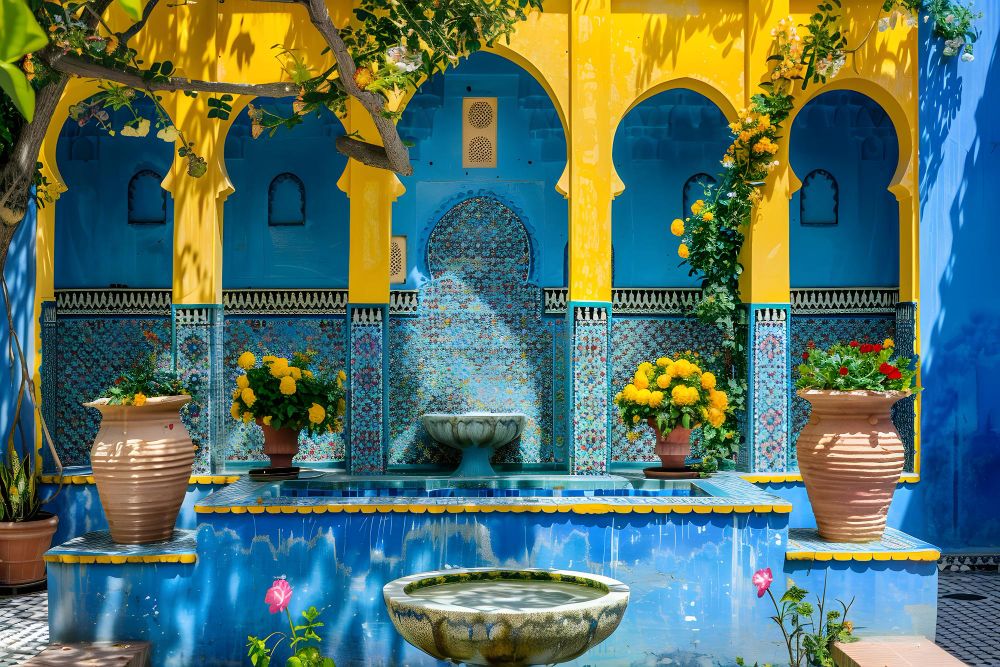
マジョレル庭園
The Majorelle Gardens are one of the most iconic and visited destinations in Marrakech, Morocco. Known for its lush vegetation, vibrant blue colors, and fascinating history, this place attracts visitors from all over the world. However, for a person in a wheelchair, it is important to have accurate information about accessibility, services, and details of the place to ensure a comfortable and enjoyable visit. Below, we offer a detailed guide to the Majorelle Gardens, especially focused on the needs of people with reduced mobility.
History and Relevance of the Majorelle Gardens
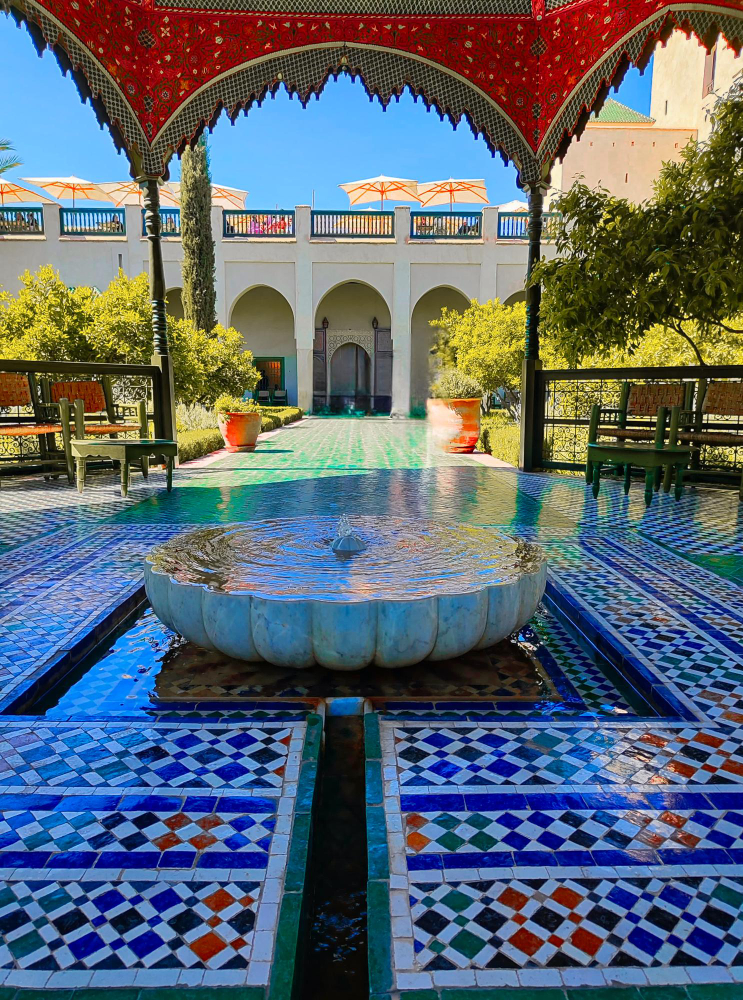
The Majorelle Gardens were created by French painter Jacques Majorelle in the 1920s. Inspired by traditional Islamic gardens and the exotic gardens of Morocco, Majorelle spent nearly forty years of his life creating this oasis in the heart of Marrakech. In 1980, the famous fashion designer Yves Saint Laurent and his partner Pierre Bergé acquired the property, restored the garden, and opened it to the public, turning it into a cultural and artistic landmark. Today, it is a vibrant place that reflects a passion for botany, art, and cultural preservation.
Accessibility for People in Wheelchairs
The Majorelle Gardens have made considerable efforts to improve accessibility for people with reduced mobility. Below are the most relevant aspects of accessibility in the Majorelle Gardens:
- Entrances and Access: The gardens have an accessible entrance for people in wheelchairs. The main access is designed to facilitate entry and exit without significant barriers. There are gentle ramps that allow for barrier-free entry, and the garden staff is available to assist visitors who need it.
- Paths: Once inside the gardens, the paths are paved and relatively wide, making it easy to move around in a wheelchair. Most areas of the garden are accessible, including the main observation areas and the areas around fountains and sculptures. However, some smaller paths may have gravel or uneven surfaces, so caution is advised in certain areas.
- Berber Museum: Within the Majorelle Gardens is the Berber Museum, which offers a fascinating collection of artifacts and textiles from Berber culture. This museum is also accessible for people in wheelchairs. There are ramps and elevators that allow visitors to move easily between different sections of the museum.
- Café and Souvenir Shop: There is a charming café within the gardens where visitors can relax and enjoy a refreshment or a light meal. The café is wheelchair accessible, and staff are available to help if needed. Additionally, there is a souvenir shop that offers a variety of handcrafted products and garden-related mementos. This shop is also accessible for people in wheelchairs.
Additional Services and Suggestions
- Wheelchairs Available: The Majorelle Gardens offer a limited number of wheelchairs for visitors. These wheelchairs can be requested at the entrance, but it is advisable to call in advance to ensure availability.
- Best Time to Visit: Marrakech can be extremely hot during the summer months. For a more comfortable visit, especially for people in wheelchairs, it is recommended to visit the Majorelle Gardens during the cooler seasons, such as fall or spring, or early in the morning or late in the afternoon during the summer.
- Avoid Crowds: The Majorelle Gardens are very popular and can be quite crowded. To avoid crowds and enjoy a more peaceful experience, it is advisable to visit the gardens on weekdays and avoid weekends or public holidays.
Entrance Fees
The entrance fee to the Majorelle Gardens varies depending on the type of visitor:
- Adults: 150 MAD (approximately 14 EUR)
- Students: 60 MAD (with valid ID)
- Children under 12: Free entry
The entrance to the Berber Museum within the Gardens has an additional cost:
- Adults: 50 MAD (approximately 5 EUR)
- Students: 30 MAD
It is important to mention that prices may change, so it is recommended to check the updated costs on the official website before the visit.
Accessible Restrooms:
The Majorelle Gardens have adapted restrooms for people with reduced mobility. These restrooms are located near the main entrance and are easily accessible. They are equipped with support bars and enough space to maneuver a wheelchair, ensuring comfort and privacy for visitors.
Accessibility:
Reaching the Majorelle Gardens by public transportation is quite simple, even for people with reduced mobility. Here are some options to arrive comfortably:
- Bus: Local buses are an economical option to reach the Majorelle Gardens. Bus line number 1 connects Jemaa el-Fna Square with the Majorelle Gardens. The trip is short, and there are stops near the garden entrance. However, buses in Marrakech may not be fully adapted for people in wheelchairs, so it is advisable to check accessibility in advance.
- Taxi: Taking a taxi is one of the easiest and most convenient ways to get to the gardens, especially for people in wheelchairs. Taxis in Marrakech are relatively inexpensive, and many drivers are familiar with the location of the Majorelle Gardens. It is recommended to request a larger taxi or a taxi adapted for wheelchairs if necessary. You can also ask the driver to wait for the return trip, which is convenient if you prefer not to rely on public transportation.
Contact Information for Adapted Taxi Companies:
- Socota Radio Taxi Marrakech
- Phone: (+212) 524 29 00 00
- Email: [email protected]
- Taxi Vert Marrakech
- Phone: (+212) 524 40 94 40
- Email: [email protected]
Address and Contact Information
- Address: Rue Yves Saint Laurent, Marrakech 40090, Morocco
- Phone: (+212) (0)5 24 31 30 47
- Email: [email protected]
- Website: www.jardinmajorelle.com