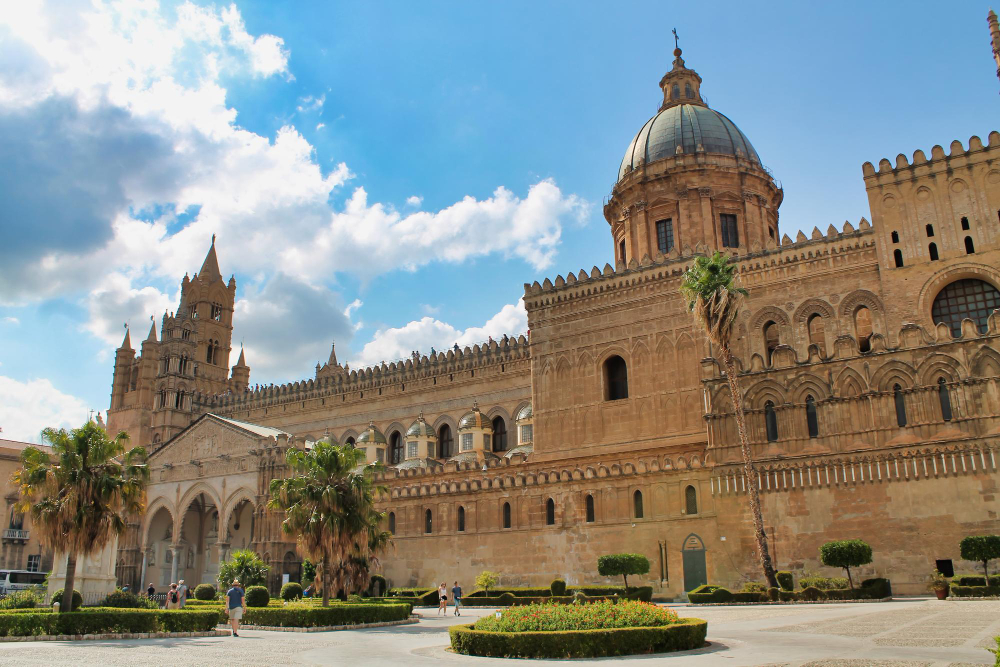
The Cathedral of Our Lady (Frauenkirche) is one of Munich's most iconic landmarks. With its distinctive twin towers rising above the city skyline, this Gothic cathedral is a significant landmark and a place of historical and architectural interest.
For wheelchair users, it is essential to know that the Frauenkirche is accessible. There is a side entrance on the south side of the cathedral that is equipped with a ramp for wheelchairs, allowing easy access to the interior of the building.
Once inside, you will find that the main nave is spacious and on one level, making it easy for wheelchair users to move around. Here, you can enjoy the impressive Gothic architecture, beautiful stained glass windows, and the various works of art and monuments that adorn the church.
An important point to note is that although access to the towers to enjoy panoramic views of the city is one of the main attractions of the Frauenkirche, unfortunately, this is not accessible to wheelchair users due to the need to climb a spiral staircase.
In addition to visiting the cathedral, you can also explore the surroundings. The Frauenkirche is located in the center of Munich, an area that is generally wheelchair accessible, with wide sidewalks and many street-level pedestrian crossings.
As always, I would recommend that you contact the Frauenkirche directly before your visit to get the most up-to-date information on accessibility and to make any necessary arrangements for your visit.
Admission:
The entrance to the Cathedral of Our Lady (Frauenkirche) in Munich costs around €7.5 for adults. Unfortunately, remember that access to the towers is not accessible to wheelchair users due to the stairs.
Its opening hours are Monday to Friday: 7:00am to 8:30pm, Saturdays: 7:00am to 8:00pm, Sundays and holidays: 12:30pm to 8:00pm.
Please note that these hours may vary, especially during holidays or special events. Additionally, the church may be closed to the public during religious services.
Restrooms:
We could not find information about their restrooms.
Accessibility:
The Cathedral of Our Lady (Frauenkirche) in Munich is located in a central location and is easily accessible by public transportation. Here are some options:
U-Bahn (Subway): You can take the U3 or U6 line and get off at "Marienplatz" station. This station is wheelchair accessible and has elevators. From the station, it is a short walk of about 5 minutes to the cathedral.
S-Bahn (Urban train): You can also take any S-Bahn line that goes to "Marienplatz" station. Like the U-Bahn station, the S-Bahn station is also wheelchair accessible and is a short walk from the cathedral.
Tram: Tram lines 19 and N19 stop at "Theatinerstraße" station, which is about a 5-minute walk from the cathedral.
Bus: Bus lines 52 and 62 stop at "Marienplatz (Rindermarkt)" station, which is near the cathedral.
Address and contact:
Frauenplatz 1, 80331 Munich, Germany
Phone: (+49) 89 2900820
Website: www.muenchner-dom.de
BMW Museum
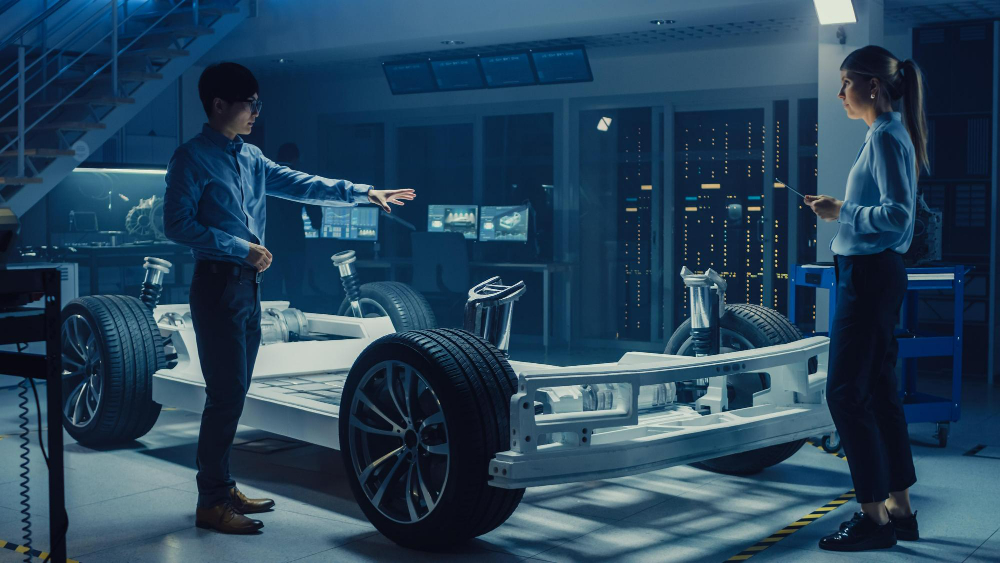
Visiting the BMW Museum in Munich is an exciting and enriching experience, and this trip is fully accessible for individuals with limited mobility, including those using wheelchairs.
The BMW Museum, a paradise for car and technology enthusiasts, is located in the heart of Munich, in an innovative building that reflects the essence of the brand: the perfect combination of design, innovation, and functionality. The museum is fully wheelchair accessible, with an inclusive and adapted approach that allows all visitors to fully enjoy their visit.
As you approach the museum, you can already appreciate the grandeur of the building housing this fascinating collection. The structure itself is a modern work of art and gives you a glimpse of the cutting-edge experience that awaits inside. Accessibility is a priority here: the parking area has designated spaces for visitors with reduced mobility, and the building's entrances are barrier-free.
Once inside, you'll discover that the museum is equipped with elevators that will take you to all levels of the building. Additionally, the hallways are wide and flat, facilitating wheelchair mobility. The lighting is good, and the displays are designed to be visible from a seated position, ensuring that all visitors can fully appreciate the vehicles and exhibits.
The museum presents an impressive timeline of BMW's history, from its beginnings to the present day. The variety of exhibitions is astounding, from classic cars to motorcycles, and even the most modern and futuristic models. It also provides a fascinating insight into the innovation and technology that have driven BMW over the years.
One of the main attractions is the "BMW i. Visionary Mobility" exhibition, dedicated to sustainable mobility and the future of transportation. Here, you can explore innovative concepts of electric cars and autonomous driving technologies. The accessibility of this exhibition is exemplary, with all elements at an appropriate height and descriptions available in accessible formats.
The museum also offers a wide range of services to ensure a comfortable and enjoyable visit for all guests. The restrooms are wheelchair accessible, and wheelchairs are available for use in the museum if needed.
Additionally, the BMW Museum provides a mobile app that offers a comprehensive and detailed guide to the museum, making it easier to navigate and plan your visit. The app also provides information about each exhibit, adding an additional dimension to your experience.
After exploring the exhibits, you can relax and enjoy a meal or refreshments at the M1 restaurant, which is also wheelchair accessible. With a menu that includes both international dishes and Bavarian specialties, it's the perfect place to reflect on the impressive displays you've seen. The table and seating arrangements ensure easy access, and the staff is always willing to assist if needed.
Beyond the exhibits and services, what truly stands out is the museum's commitment to inclusion and accessibility. The employees of the BMW Museum are well-trained and aware of the needs of visitors with reduced mobility. From the moment of your arrival until your departure, you feel welcomed and supported.
In summary, the BMW Museum in Munich is a shining example of how a place can be both exciting and fully accessible. With its attention to detail, focus on inclusion, and commitment to accessibility, it is a place that truly embraces all visitors. The combination of BMW's fascinating history, the thrill of innovation, and the beauty of design makes this museum a must-visit for everyone, regardless of their mobility.
Entrance:
The entrance fee to the BMW Museum in Munich for an adult is 10 euros. Children under 18 can enter for free. I would recommend checking the current prices on the official BMW Museum website or contacting the museum directly, as prices may have changed.
Restrooms:
There are several accessible restrooms available.
Accessibility:
To reach the BMW Museum by accessible public transportation from Marienplatz, you can follow these instructions:
Subway (U-Bahn): Take the U3 (U-Bahn): Take the U3 line towards Moosach. Get off at the "Olympiazentrum" station. From there, the BMW Museum is about a 10-minute walk.
Tram: Take tram line 27 towards Petuelring. Get off at the "Petuelring" stop. From there, the BMW Museum is about a 5-minute walk. You can also take tram lines 20 or 21 to the Olympiapark West stop.
Bus: Take bus line 173 towards Scheidplatz and get off at the "Petuelring" stop. From there, it's a short walk to the BMW Museum.
Address and Contact:
BMW Museum, Am Olympiapark 2, 80809 Munich, Germany
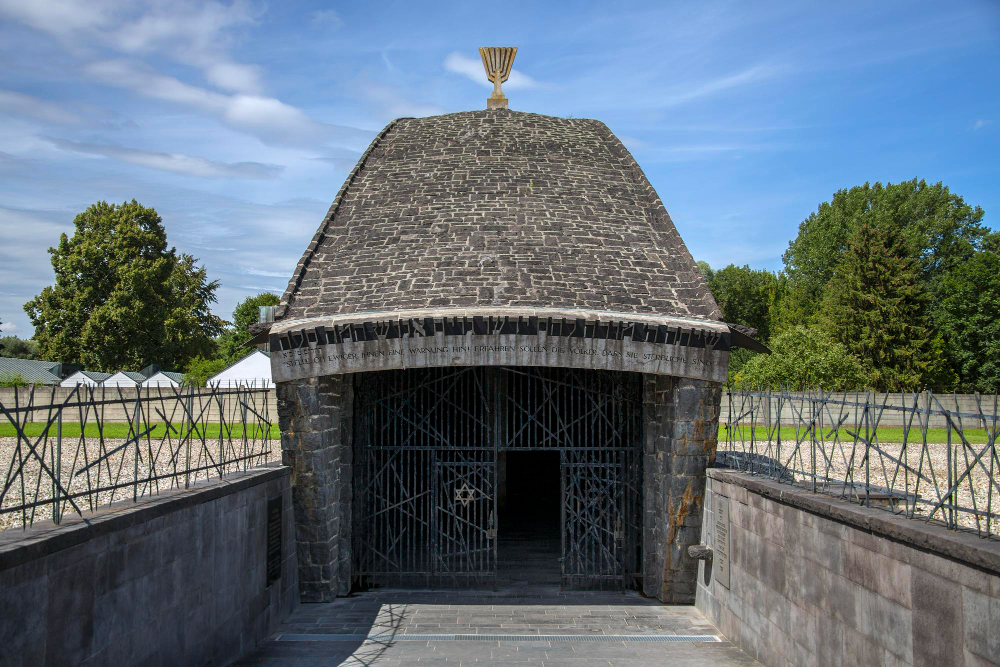
Visiting the Dachau Concentration Camp is a deeply moving and educational experience. Although it is tinged with sadness and reflection, the visit is essential to understand history and ensure that the horrors of the past are not forgotten. Fortunately, the site has been adapted to be accessible for everyone, including those using wheelchairs.
The Dachau Concentration Camp, located about 20 km northwest of Munich, was the first Nazi concentration camp in Germany. Today, it is a memorial site, a commemorative monument that serves to remember the thousands of victims who lost their lives there.
Upon arrival, you will find yourself facing the original entrance of the camp, marked by the infamous words "Arbeit macht frei" (Work sets you free). Here, the tour begins, taking you through various exhibitions, monuments, and points of interest.
The site itself is quite accessible. The paths are mostly flat and paved, although there are some areas with gravel. However, these areas are also wheelchair accessible. In case you need assistance, the site staff is always willing and prepared to assist.
The visit to the museum and memorial is an intense experience. The exhibitions are well-designed and provide a detailed and chronological narration of the events. The interactive displays and videos are accessible and at an appropriate height for wheelchair users.
The maintenance building, which was once a place of terror and suffering, now houses a permanent exhibition. Through informative panels, personal belongings, photographs, and testimonies, a detailed and poignant overview of life in the camp is presented. The exhibition is designed to be fully accessible, with ramps and elevators for those who need them.
A particularly moving part of the visit is the walk to the barracks. Although most of the original barracks were demolished, two have been reconstructed to show the living conditions in the camp. These barracks are wheelchair accessible.
A stroll through the camp yard will lead you to the Catholic church, the Protestant church, and the Jewish synagogue, each serving as a reminder of the human spirit and faith that persisted even in the most discouraging conditions. These places of worship are accessible for wheelchair visitors.
Finally, the tour takes you to the commemorative monuments, each one a tribute to the thousands of lives lost in Dachau. One of the most striking monuments is the sculpture by Nandor Glid, a heartbreaking tribute to the victims of Nazi horror. Like the rest of the site, these monuments are accessible for wheelchair visitors.
The visit is an experience that leaves a lasting impression. It is a reminder of one of the darkest periods in human history and a testimony to the importance of remembering and learning from our past. Although it is an emotionally intense visit, it is also an opportunity to reflect on the resilience of the human spirit.
After the visit, you can take a moment to rest and reflect at the on-site cafeteria, which is wheelchair accessible. Here, you can grab a snack and perhaps discuss your thoughts and emotions with other visitors.
Visiting the Dachau Concentration Camp is an important part of any trip to Munich. It is an opportunity to learn, reflect, and remember. Despite the somber nature of the visit, it is an important reminder of what happened and a testament to the importance of memory and education. Fortunately, the site has been designed to be accessible for everyone, meaning that all visitors, regardless of their physical abilities, can experience this significant memorial site.
In summary, while visiting the Dachau Concentration Camp can be emotionally challenging, it is also a unique opportunity to learn and reflect. And thanks to improvements in accessibility, individuals using wheelchairs can fully experience this important historical site. It is certainly a visit that will not be easily forgotten.
Entrance:
Admission to the Dachau Concentration Camp Memorial is free. However, guided tours and audio guides for self-guided tours may have associated costs.
The memorial is open from 9:00 am to 5:00 pm every day of the week.
Restrooms:
There are restrooms adapted for people with mobility issues available.
Accessibility:
The journey from Munich is relatively straightforward. The most accessible way to get there is by taking the S2 train from Munich to Dachau station. This train is equipped to accommodate wheelchair users. Once in Dachau, you can take bus 726 towards 'Saubachsiedlung' and get off at the 'KZ-Gedenkstätte' stop, which is right outside the memorial. This bus is also wheelchair accessible.
Address and Contact:
KZ-Gedenkstätte Dachau, Alte Römerstraße 75, 85221 Dachau, Germany
Marienplatz, or Mary's Square, is the pulsating heart of Munich and a must-visit place for any visitor to the city. This central square is wheelchair accessible and offers a blend of history, architecture, and culture.
Starting your visit at Marienplatz subway station, you will find elevators and ramps that facilitate access from the subway to the surface of the square. This station is one of the most modern and accessible in Munich's public transportation system.
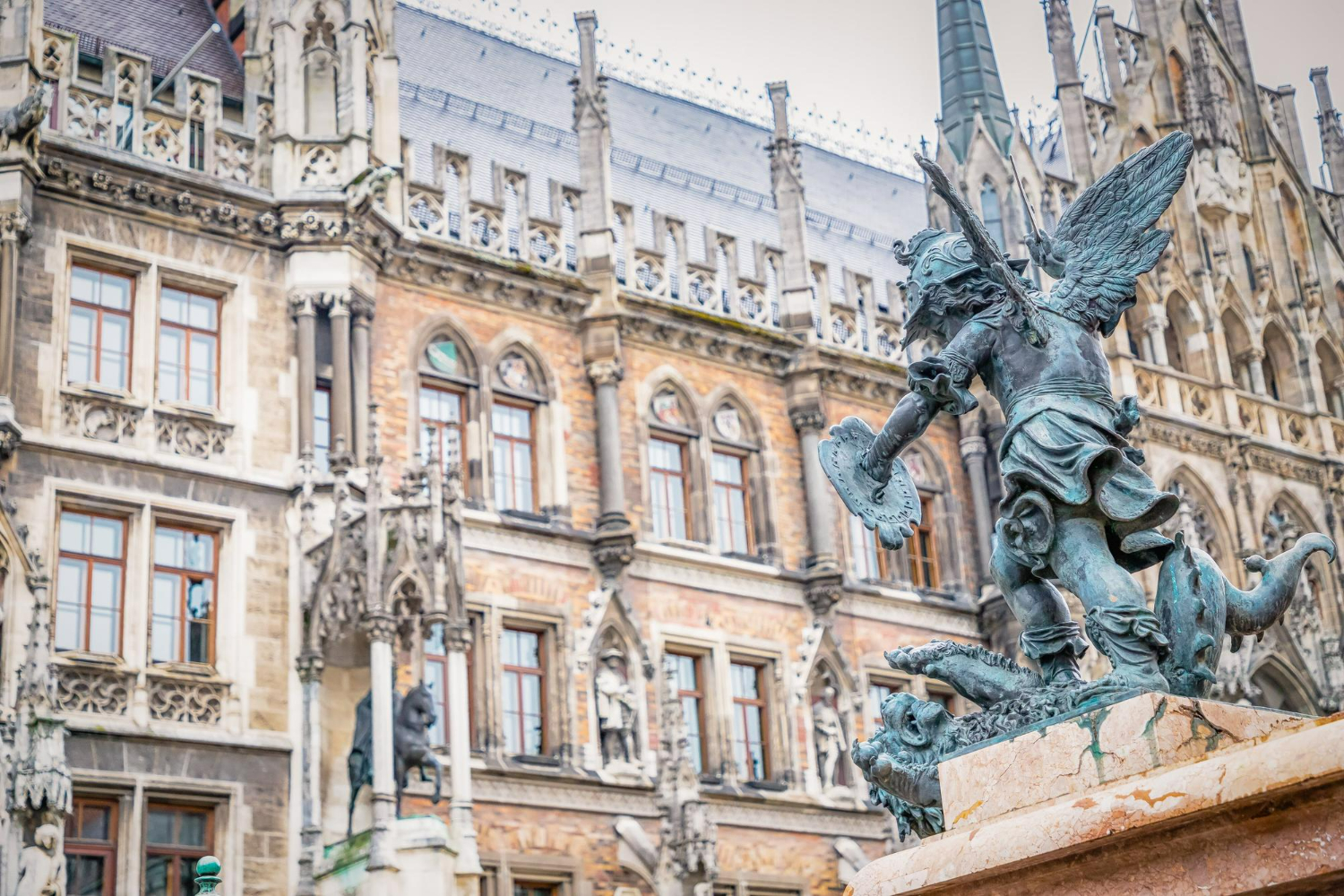
Upon reaching the surface, the first thing that will capture your attention is the majestic Neues Rathaus, or New Town Hall. This Neo-Gothic building, with its famous Glockenspiel, is a true architectural gem. The entrance to the building is flat, and there is an elevator available to access the upper floors. We recommend checking the Glockenspiel's schedule to not miss this unique spectacle.
The square itself is spacious and paved, allowing for easy wheelchair movement. In the middle of the square, you will see the Mariensäule, a golden column with a statue of the Virgin Mary on top. This is a good meeting point and a popular spot for photos.
If you head east from the Mariensäule, you will reach the Altes Rathaus, or Old Town Hall. This building, which now houses the Toy Museum, is less accessible than the New Town Hall but still worth seeing from the outside due to its beautiful architecture.
Marienplatz is also surrounded by numerous shops and restaurants, many of which are wheelchair accessible. A bit further from the square, you will find the Cathedral of Our Lady and the Viktualienmarkt, both easily accessible by wheelchair.
Remember that while Munich is a very accessible city, there may be variations in accessibility levels between different places, and you may need to plan ahead and seek more detailed information for your specific visit.
Entrance:
Completely free 24 hours a day.
Restrooms:
There are no restrooms directly in the square, but you can access the town hall or a restaurant on the square that has adapted restrooms.
Accessibility:
Here's a general example of how to get to Marienplatz using accessible public transportation for people with reduced mobility.
Train (S-Bahn): Marienplatz is accessible via the S-Bahn train lines S1, S2, S3, S4, S6, S7, and S8. S-Bahn stations usually have wheelchair access and, in many cases, elevators to facilitate access.
Subway (U-Bahn): You can also reach Marienplatz via the U3 and U6 subway lines. Like the S-Bahn, subway stations typically have suitable facilities for people with reduced mobility.
Tram: In Munich, tram lines 19 and N19 pass through Marienplatz. Most trams in Munich are equipped for wheelchair access.
Bus: Several bus lines also pass through Marienplatz. Buses in Munich are equipped with wheelchair ramps and designated wheelchair areas inside the bus.
Address:
Marienplatz, 80331 Munich, Germany.
Englischer Garten
The Englischer Garten, or English Garden, is one of the largest urban parks in the world and is located in Munich, Germany. Fortunately, it is quite accessible for people in wheelchairs.
The park has many paved paths that are suitable for wheelchairs. However, it's important to note that some areas of the park may have uneven terrain, and some of the routes may have slopes.
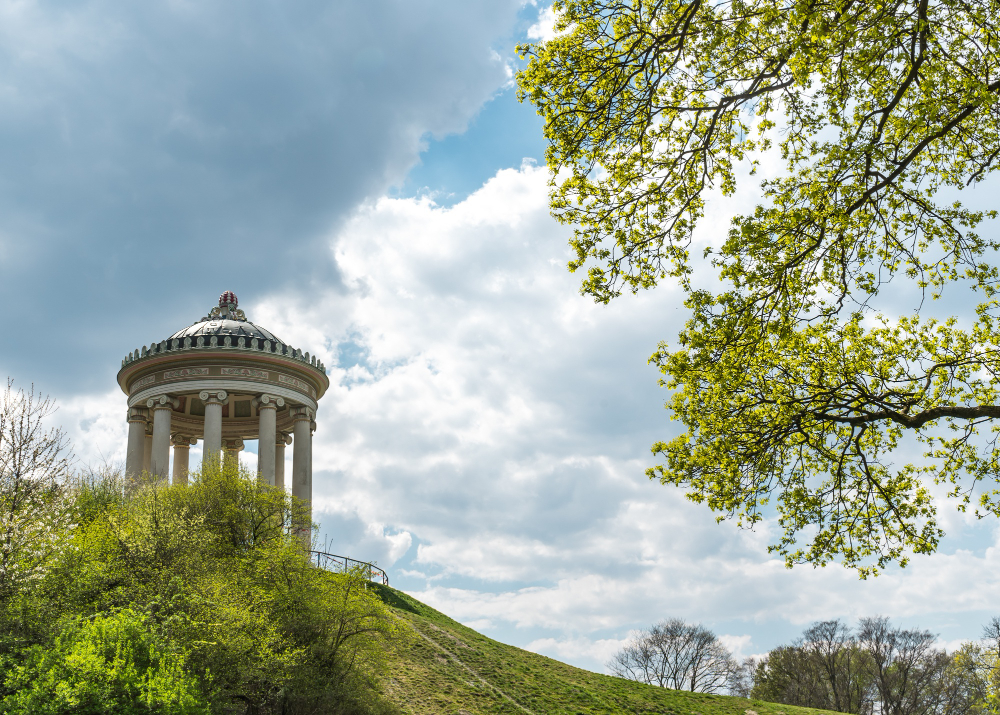
One of the highlights of the park is the Monopteros Tower, although unfortunately, it is not wheelchair accessible due to its stairs. However, the Chinesischer Turm (Chinese Tower) Beer Garden is accessible and is a wonderful place to relax and enjoy the atmosphere of the park.
While the park is generally accessible, it's always a good idea to plan the route in advance to avoid any challenging terrain. We recommend using a park map and perhaps even contacting the local tourism service for more information and tips on park accessibility.
Here is the contact information for the Munich Tourism Office:
München Tourismus
Sendlinger Str. 1, 80331 Munich, Germany
Phone: (+49) (0)89 233 96500
Entrance:
The park is open 24/7, 365 days a year, and admission is completely free.
Restrooms:
There are several accessible restrooms available.
Accessibility:
To reach the Englischer Garten by public transportation from Marienplatz, you can take the following routes:
Subway (U-Bahn): Take the U3 or U6 line towards Münchner Freiheit. Get off at the "Münchner Freiheit" station, and from there, it's a short walk to the south entrance of the Englischer Garten.
Tram: Take tram line 16 towards Effnerplatz. Get off at the "Tivolistraße" stop. From there, it's a short walk to the north entrance of the Englischer Garten.
Bus: Take bus line 54 towards Münchner Freiheit and get off at the "Chinesischer Turm" stop. This stop is right in the middle of the park.
Address:
Englischer Garten, 80538 Munich, Germany.
Viktualienmarkt
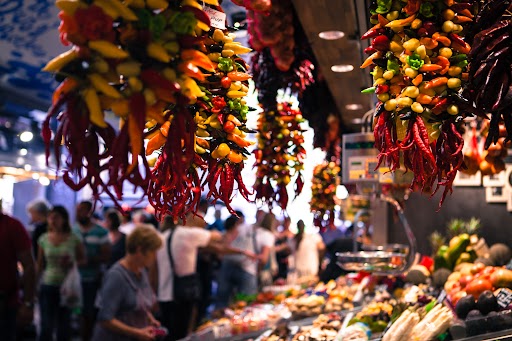
This market located in the heart of Munich is a lively place that you shouldn't miss if you visit the city. It is an open-air market that offers a variety of fresh products, local specialties, and crafts. From fruits and vegetables to cheese, wine, flowers, and much more, it is a wonderful place to explore the flavors and colors of Bavaria.
Accessibility for wheelchair users at Viktualienmarkt is good. The paths are mostly flat and paved, allowing for easy movement. However, during peak hours, the market can be crowded, making it more difficult to navigate. Planning your visit during less crowded hours can help ensure a quieter and more enjoyable experience.
One of the main attractions of the market is the outdoor beer garden, which is wheelchair accessible. Here you can enjoy a local beer and an outdoor meal while observing the hustle and bustle of the market.
In addition to the market stalls, the market also hosts various events and festivals throughout the year. I would recommend checking the schedule of events on their official website to see if there is anything special happening during your visit.
Entrance:
It is a public open-air market and is open to everyone free of charge. The market is open from Monday to Saturday from 08:00 to 20:00.
Restrooms:
Regarding accessible restrooms, there are public bathrooms available at the market. However, I cannot confirm with certainty if these bathrooms are wheelchair accessible.
Accessibility:
Viktualienmarkt in Munich is located in a very central location and is easily accessible by public transportation.
Here are some options:
U-Bahn (Metro): You can take the U3 or U6 line and get off at the "Marienplatz" station. This station is wheelchair accessible and has elevators. From the station, it is a short 5-minute walk to the market.
S-Bahn (Urban Train): You can also take any S-Bahn line that goes to the "Marienplatz" station. Like the U-Bahn station, the S-Bahn station is wheelchair accessible and is a short walk from the market.
Tram: Tram lines 19 and N19 stop at the "Theatinerstraße" station, which is about a 5-10 minute walk from the market.
Bus: Bus lines 52 and 62 stop at the "Marienplatz (Rindermarkt)" station, which is close to the market.
Market address:
Viktualienmarkt 3, 80331 München, Germany.
O seu guia de Munique
Munique é uma bela cidade localizada no sul da Alemanha, famosa pela sua cultura, arquitetura e cerveja. Se você estiver em cadeira de rodas, ficará satisfeito em saber que Munique é uma cidade muito acessível, com uma ampla variedade de serviços e instalações para pessoas com mobilidade reduzida.
Uma das principais atrações de Munique é seu centro histórico, com suas ruas estreitas de paralelepípedos e edifícios antigos, muitos dos quais foram restaurados para garantir a acessibilidade. Na praça Marienplatz, o coração da cidade, você encontrará a famosa igreja Frauenkirche, que dispõe de rampas e elevadores para facilitar o acesso a cadeiras de rodas.
Se você é amante de arte e cultura, o Museu de Arte Moderna de Munique é uma visita obrigatória. O museu tem entradas amplas, elevadores e rampas para garantir o acesso a todas as exposições e salas de exposição.
Outro local interessante para visitar é o English Garden, um dos maiores parques urbanos do mundo, com uma área superior a 3 quilômetros quadrados. O parque tem amplos caminhos pavimentados, o que o torna muito acessível a pessoas em cadeira de rodas. Além disso, você pode aproveitar uma tarde agradável em um dos seus muitos cafés ao ar livre.
Munique também é famosa pela sua cerveja e cervejarias tradicionais, muitas das quais são acessíveis a pessoas em cadeira de rodas. Você pode aproveitar uma autêntica experiência bávara no Hofbräuhaus, uma das cervejarias mais famosas de Munique, que dispõe de banheiros acessíveis e elevadores para chegar aos andares superiores.
Em 2021, a população de Munique era de aproximadamente 1,5 milhão de pessoas, o que a torna a terceira cidade mais populosa da Alemanha, depois de Berlim e Hamburgo. Munique é conhecida por ser uma das cidades mais prósperas da Europa e tem uma das taxas de desemprego mais baixas da Alemanha. É sede de muitas empresas importantes, incluindo Siemens, BMW e Allianz, entre outras.
A cidade também é famosa pelo Oktoberfest, um festival da cerveja que atrai milhões de visitantes de todo o mundo todos os anos. Durante o festival, são consumidos mais de 6 milhões de litros de cerveja, e são servidos pratos bávaros tradicionais como joelho de porco e salsicha branca.
A cidade dispõe também de um impressionante sistema de transporte público, incluindo metrô, bondes e ônibus, que facilita a locomoção. Além disso, Munique é conhecida por ser uma cidade muito segura, com uma taxa de criminalidade relativamente baixa em comparação com outras cidades europeias.
Em resumo, Munique é uma cidade bela e acessível a cadeiras de rodas, com uma ampla variedade de atrações e serviços projetados para garantir a inclusão de todas as pessoas. Aproveite sua visita!
Posto de turismo de Munique
Os postos de turismo em Munique foram projetados para serem acessíveis a pessoas com mobilidade reduzida. A maioria dos postos está localizada em edifícios modernos ou históricos que cumprem normas de acessibilidade e têm portas de entrada amplas, rampas de acesso e elevadores.
O principal posto de turismo de Munique está localizado na praça Marienplatz, no coração do centro histórico da cidade. O edifício tem rampas de acesso e elevadores para pessoas com mobilidade reduzida, e a equipe do posto é treinada para assistir e fornecer informações a visitantes com deficiência.
Além do posto principal, existem várias filiais do posto de turismo em toda a cidade, incluindo uma na Estação Central de Munique. A filial da estação também foi projetada para ser acessível a pessoas com mobilidade reduzida, com rampas de acesso e elevadores para chegar às áreas de informação turística.
Todos os postos de turismo de Munique oferecem informações sobre atrações turísticas acessíveis na cidade, bem como recomendações sobre hotéis, restaurantes e atividades adequadas a pessoas com mobilidade reduzida. Também podem fornecer mapas e guias turísticos especificamente para pessoas com deficiência.
Em resumo, os postos de turismo de Munique foram projetados para serem acessíveis e prestar um serviço de alta qualidade a todos os visitantes, incluindo os com mobilidade reduzida. A equipe é treinada para fornecer informações e assistência a pessoas com deficiência, e as filiais estão convenientemente localizadas em toda a cidade para facilitar o acesso às informações turísticas.
Posto de Turismo Principal:
Serviços:
O posto de turismo da Marienplatz oferece uma ampla variedade de serviços, incluindo:
Informações sobre atrações turísticas na cidade e arredores
Mapas e guias turísticos da cidade
Venda de ingressos para atrações e eventos
Reservas de hotéis e hospedagem
Informações sobre transporte público e rotas turísticas
Assistência em várias línguas, incluindo inglês, espanhol, francês, italiano, russo, chinês e japonês.
O horário de funcionamento do posto de turismo da Marienplatz varia conforme a estação. Durante os meses de verão (abril a outubro), o posto está aberto de segunda a sábado das 9:00 às 19:00 e aos domingos e feriados das 10:00 às 16:00. Durante os meses de inverno (novembro a março), o posto está aberto de segunda a sábado das 10:00 às 18:00 e aos domingos e feriados das 10:00 às 16:00.
O posto de turismo da Estação Central de Munique oferece uma ampla variedade de serviços, incluindo:
Informações sobre atrações turísticas na cidade e arredores
Mapas e guias turísticos da cidade
Venda de ingressos para atrações e eventos
Reservas de hotéis e hospedagem
Informações sobre transporte público e rotas turísticas
Assistência em várias línguas, incluindo inglês, espanhol, francês, italiano, russo, chinês e japonês.
Além disso, o posto de turismo da Estação Central de Munique também tem um balcão de venda de passagens de trem, facilitando aos viajantes a compra dos seus ingressos de transporte para continuar a viagem.
O horário de funcionamento do posto de turismo da Estação Central de Munique é de segunda a domingo das 9:00 às 18:00.
Além desses postos de turismo, você também pode obter informações turísticas online através do site oficial de turismo de Munique, onde encontrará informações detalhadas sobre atrações turísticas, hospedagem, transporte e eventos especiais na cidade. Você também pode entrar em contato com o atendimento ao cliente do site se precisar de assistência adicional.
Posto de Turismo do Aeroporto de Munique:
O posto de turismo do Aeroporto de Munique é uma excelente opção para viajantes que chegam à cidade de avião e pretendem obter informações turísticas ou assistência durante a estadia. Veja mais informações:
Localização:
O posto de turismo do Aeroporto de Munique está localizado no Terminal 2, nível de chegadas, na área chamada "Munich Airport Center" (MAC). O endereço exato é Nordallee 25, 85356 Munich, Germany.
Horário de funcionamento:
O posto de turismo do Aeroporto de Munique está aberto de segunda a domingo das 9:00 às 18:00.
Serviços:
O posto de turismo do Aeroporto de Munique oferece uma ampla variedade de serviços, incluindo:
Informações sobre atrações turísticas na cidade e arredores
Mapas e guias turísticos da cidade
Venda de ingressos para atrações e eventos
Reservas de hotéis e hospedagem
Informações sobre transporte público e rotas turísticas
Assistência em várias línguas, incluindo inglês, espanhol, francês, italiano, russo, chinês e japonês.
O Aeroporto de Munique (Aeroporto Franz Josef Strauss de Munique) é um dos aeroportos mais acessíveis e amigos das pessoas com deficiência na Europa. Veja algumas informações relevantes para usuários de cadeira de rodas:
Acesso ao aeroporto: O Aeroporto de Munique oferece serviços de transporte acessíveis de e para o aeroporto. Também estão disponíveis táxis acessíveis, e a maioria das empresas de aluguel de carros pode fornecer veículos adaptados.
Assistência no aeroporto: Se precisar de assistência, recomenda-se entrar em contato com sua companhia aérea ou agência de viagens com pelo menos 48 horas de antecedência. A assistência inclui ajuda no check-in, na locomoção pelo aeroporto, no embarque e desembarque do avião e na retirada de bagagem.
Mobilidade no aeroporto: O Aeroporto de Munique é muito acessível a cadeiras de rodas e fácil de navegar. Existem elevadores e rampas disponíveis em todo o aeroporto, e também são fornecidos serviços de aluguel de cadeiras de rodas.
Banheiros: Existem banheiros acessíveis e bem sinalizados em todo o aeroporto.
Áreas de espera: As áreas de espera estão equipadas com espaços confortáveis e acessíveis para passageiros em cadeira de rodas.
Estacionamento: Existem vagas de estacionamento para pessoas com deficiência perto das entradas.
Localização: O aeroporto está localizado na área de Erdinger Moos em Munique, a cerca de 28,5 quilômetros a nordeste do centro da cidade de Munique.
Terminais: O aeroporto consiste em dois terminais de passageiros, o Terminal 1 e o Terminal 2, e um moderno centro de transportes chamado Munich Airport Center (MAC), localizado entre os dois terminais. O Terminal 1 abriga várias companhias aéreas, enquanto o Terminal 2 é utilizado pela Lufthansa e pelos seus parceiros Star Alliance.
Instalações: O aeroporto oferece uma variedade de instalações e serviços, incluindo uma ampla gama de lojas e restaurantes, balcões de câmbio, caixas eletrônicos, instalações para reuniões e conferências e serviços de aluguel de carros. Dispõe também de instalações de entretenimento como um cinema e um centro de visitantes que oferece visitas guiadas ao aeroporto.
É importante lembrar que, embora o aeroporto seja projetado para ser acessível, cada pessoa pode ter necessidades únicas. Por isso, é sempre melhor entrar em contato com a companhia aérea e o aeroporto com antecedência para garantir que todas as necessidades sejam atendidas.
Finalmente, lembre-se de que a situação pode mudar ao longo do tempo, por isso recomenda-se verificar informações atualizadas no site oficial do aeroporto ou entrar em contato diretamente antes da sua viagem.
Endereço e contato:
Nordallee 25, 85356 München-Flughafen, Germany
Telefone: (+49) 89 97500 (Este é o número geral do aeroporto e pode ser utilizado para obter várias informações e assistência)
Website: www.munich-airport.de
Transporte entre o aeroporto e o centro da cidade:
Existem várias opções acessíveis de transporte do Aeroporto de Munique ao centro da cidade para usuários de cadeira de rodas:
Trens S-Bahn: Os trens S-Bahn são uma opção popular para viajar do aeroporto ao centro da cidade. As linhas S1 e S8 vão do aeroporto ao centro de Munique. As estações e os trens foram projetados para serem acessíveis, com rampas e elevadores disponíveis. No entanto, é aconselhável verificar com a Deutsche Bahn (a empresa que opera os trens S-Bahn) para garantir que as instalações acessíveis estão em funcionamento no momento da sua viagem.
Ônibus: No Aeroporto de Munique, a opção de ônibus mais comum é o Lufthansa Airport Bus, que oferece conexões entre o aeroporto e o centro da cidade. No entanto, não posso confirmar com certeza se todos esses ônibus estão equipados para acomodar passageiros em cadeira de rodas, pois essa informação pode variar e mudar.
Táxis acessíveis: Existem táxis acessíveis no aeroporto, equipados para acomodar usuários de cadeira de rodas. Estes estão geralmente disponíveis nas praças de táxis fora dos terminais, mas também podem ser reservados com antecedência. Veja alguns nomes, mas recomendaríamos entrar em contato diretamente para confirmar os serviços e fazer reservas:
ISARFUNK TaxiZentrale: Este é o maior centro de táxis de Munique e tem táxis adaptados na sua frota. Você pode ligar para (+49) 89 450 540 para reservar.
Taxi München eG: Este é outro grande centro de táxis que tem veículos adaptados disponíveis. Seu número de telefone é (+49) 89 21610.
MiniCar München: Esta empresa oferece uma variedade de serviços de transporte, incluindo táxis acessíveis. Você pode contatá-los em (+49) 89 202020.
Ride2Go: Este serviço de transporte privado também oferece veículos acessíveis. Seu número de telefone é (+49) 89 741185-100.
Aluguel de carros acessíveis: Existem várias empresas de aluguel de carros no aeroporto que oferecem veículos acessíveis. Esta pode ser uma boa opção se você se sentir confortável dirigindo e precisar de um veículo durante sua estadia em Munique.
Transporte na cidade:
Munique é uma cidade muito acessível e tem feito grandes esforços para garantir que seu sistema de transporte público é acessível a todos, incluindo pessoas com deficiências de mobilidade. Veja informações sobre as diferentes opções de transporte acessível na cidade:
Trens (S-Bahn e U-Bahn): A maioria das estações ferroviárias de Munique está equipada com elevadores e/ou rampas para facilitar o acesso às plataformas. Os trens também foram projetados para serem acessíveis, com áreas designadas para cadeiras de rodas e botões de ajuda disponíveis.
A Estação Central de Munique (München Hauptbahnhof) é uma das maiores estações ferroviárias da Alemanha e serve como um importante centro de transportes na cidade. A estação oferece numerosos serviços, incluindo restaurantes, lojas, balcões de câmbio, caixas eletrônicos e muito mais. Dispõe também de excelentes conexões de transporte público, com numerosos ônibus, bondes, linhas S-Bahn e U-Bahn operando de e para a estação.
Endereço e contato:
Bayerstraße 10a, 80335 München, Germany
Telefone: (+49) 180 6 99 66 33
Website: www.bahn.de
Ônibus: Os ônibus em Munique estão equipados com rampas para cadeiras de rodas. Além disso, os pontos de ônibus têm frequentemente informações em Braille para pessoas com deficiência visual. Os motoristas de ônibus são treinados para assistir pessoas com deficiências de mobilidade.
Metrô: O sistema de metrô de Munique (U-Bahn) foi projetado para ser acessível a todos, incluindo pessoas com mobilidade reduzida. A maioria das estações de metrô tem elevadores e/ou rampas para facilitar o acesso às plataformas. Os trens também foram projetados para serem acessíveis, com áreas designadas para cadeiras de rodas e botões de ajuda disponíveis. As plataformas e os trens estão geralmente no mesmo nível, permitindo um acesso fácil aos trens.
No entanto, é importante observar que, embora tenham sido feitos grandes esforços para tornar todas as estações acessíveis, pode haver algumas estações mais antigas que ainda estão em processo de modernização.
Bondes: Assim como os ônibus, a maioria dos bondes em Munique está equipada com rampas e tem áreas designadas para cadeiras de rodas.
Táxis acessíveis: Como mencionado anteriormente, existem várias empresas de táxi em Munique que oferecem veículos acessíveis a cadeiras de rodas. Veja alguns nomes, mas recomendaríamos entrar em contato diretamente para confirmar os serviços e fazer reservas:
ISARFUNK TaxiZentrale: Esta é a maior empresa de táxis de Munique e tem táxis adaptados na sua frota. Você pode ligar para (+49) 89 450 540 para reservar.
Taxi München eG: Esta é outra grande empresa de táxis que tem veículos adaptados disponíveis. Seu número de telefone é (+49) 89 21610.
MiniCar München: Esta empresa oferece uma variedade de serviços de transporte, incluindo táxis acessíveis. Você pode contatá-los em (+49) 89 202020.
Ride2Go: Este serviço de transporte privado também oferece veículos acessíveis. Seu número de telefone é (+49) 89 741185-100.
É importante lembrar que, embora Munique tenha um sistema de transporte público muito acessível, cada pessoa pode ter necessidades únicas. Por isso, é sempre melhor planejar sua viagem com antecedência e entrar em contato com as empresas de transporte relevantes para garantir que suas necessidades específicas possam ser adequadamente atendidas.
Você também deve estar ciente de que a acessibilidade pode variar entre diferentes veículos e estações, por isso é aconselhável verificar as informações mais atualizadas no site da MVV (Münchner Verkehrs- und Tarifverbund), a organização que supervisiona o transporte público em Munique.
Contato:
Telefone MVV: (+49) 89 41424344
Website MVV: www.mvv-muenchen.de
Restaurantes adaptados
Hofbräuhaus München: https://www.hofbraeuhaus.de/
Um dos restaurantes mais icônicos de Munique, conhecido pela sua cerveja e atmosfera bávara. O edifício é acessível a cadeiras de rodas e oferece banheiros acessíveis.
Endereço e contato:
Platzl 9, 80331 Munich, Germany
Telefone: (+49) 89 290136100
Schuhbecks in den Südtiroler Stuben: https://www.schuhbeck.de/en/
Esse restaurante oferece uma mistura de culinária bávara e mediterrânea. O restaurante é acessível a cadeiras de rodas e dispõe de um banheiro acessível.
Endereço e contato:
Platzl 6+8, 80331 Munich, Germany
Telefone: (+49) 89 2176840
Spatenhaus an der Oper: http://www.kuffler.de/en/spatenhaus.php
Esse restaurante oferece uma variedade de pratos bávaros e alemães. O restaurante é acessível a cadeiras de rodas.