Agadir, located on the Atlantic coast in southern Morocco, is a modern and vibrant city that has become one of the country’s top tourist destinations. Known for its wide golden-sand beach stretching over nine kilometers and its sunny climate throughout the year, Agadir blends hospitality, tradition, and a privileged natural environment. For tourists using wheelchairs or mobility scooters, the city is increasingly offering accessible options, thanks to its modern urban design and adapted infrastructures.
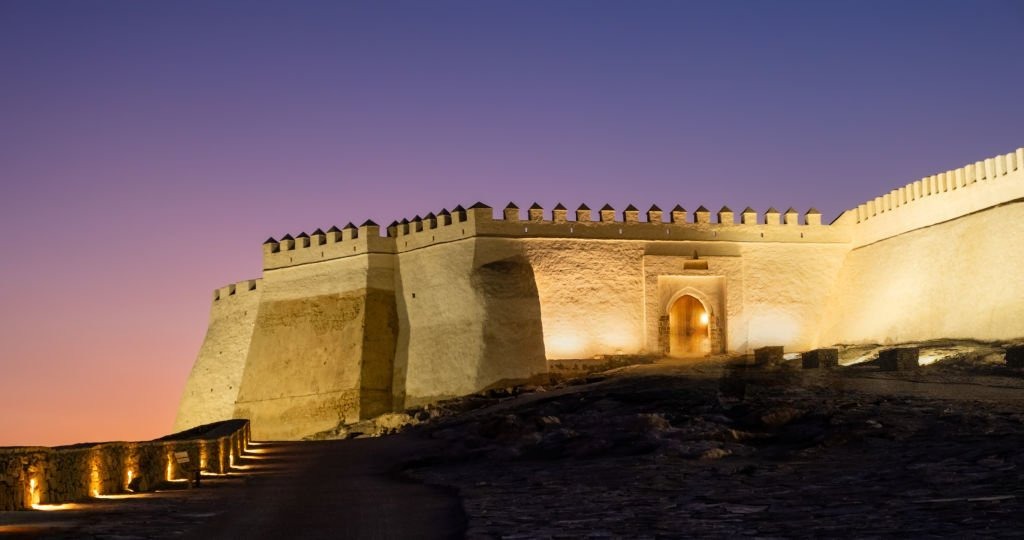
Agadir’s history is marked by a tragic event: the 1960 earthquake, which destroyed much of the city. Since then, Agadir has been almost entirely rebuilt, with a modern layout that makes it more accessible than other Moroccan cities with historic structures. However, its roots go back to the 16th century, when it developed as a fishing port on the Atlantic and was contested by the Portuguese, Berbers, and later the Moroccan sultans. One of the surviving landmarks from that era is the Kasbah of Agadir Oufella, built in 1540 on a hilltop, whose outer walls still stand today, offering unparalleled panoramic views of the bay.
Agadir Promenade and Beach
The promenade, or Corniche, is one of the most pleasant spots in the city. Fully paved and with adapted access points, it is comfortable to explore in a wheelchair. In front of it lies the vast urban beach, where wooden walkways have been installed in several areas to facilitate access. Some hotels even provide amphibious chairs so visitors with reduced mobility can safely enjoy swimming in the Atlantic.
Kasbah of Agadir Oufella
This 16th-century fortress is one of the city’s most iconic landmarks. While direct access can be challenging due to its hilltop location, the road leading up provides several accessible viewpoints. In addition, a cable car project is underway, which will connect the city with the kasbah, allowing more visitors to enjoy this historic site.
El Had Souk
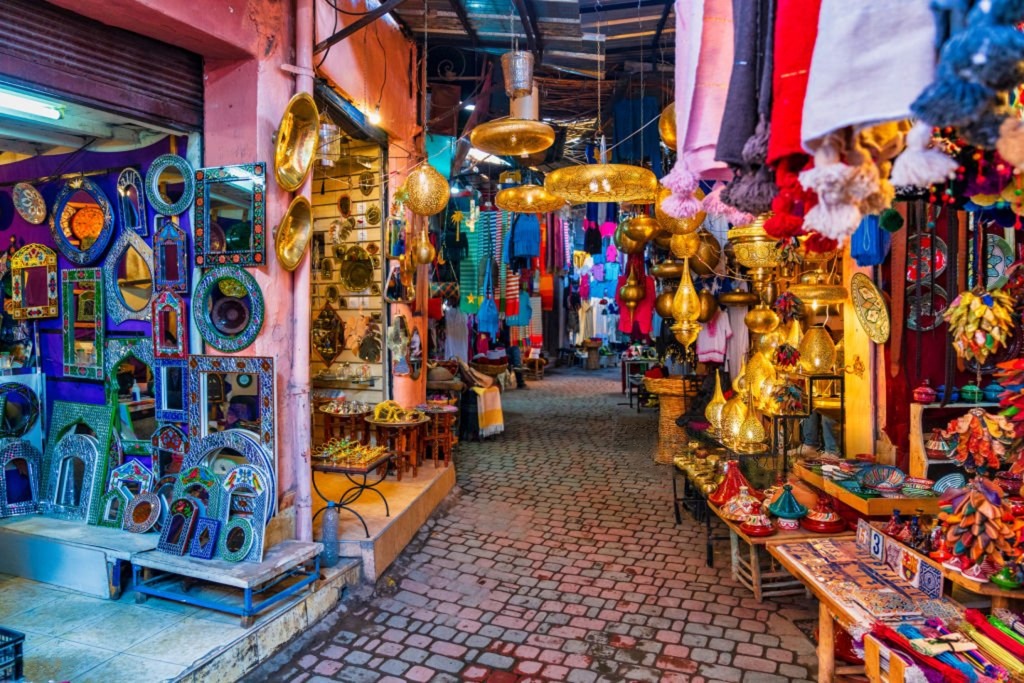
The El Had Souk is one of the largest markets in southern Morocco, with thousands of stalls selling spices, textiles, handicrafts, and fresh produce. Its wide aisles make it more comfortable to navigate by wheelchair compared to other traditional markets in the country.
Museum of Memory and the Earthquake
This museum commemorates the 1960 tragedy and showcases the city’s reconstruction. With its modern design, the building provides adapted and accessible facilities, making it an easy and informative visit.
Excursions and Nature
Just outside the city, Paradise Valley offers a landscape of oases, palm trees, and natural pools in the Anti-Atlas Mountains. While some trails are difficult, organized tours with accessible options are available.
Another highlight is the Souss-Massa National Park, a protected area of great biodiversity. It is home to the northern bald ibis, one of the world’s most endangered bird species. Some viewpoints and trails in the park have been adapted for wheelchair access.
Accessible Accommodation
Agadir has a wide range of hotels, from luxury seaside resorts to more modest accommodations. Many of them offer adapted rooms, spacious elevators, bathrooms with roll-in showers, and special services for guests with reduced mobility. It is advisable to confirm room availability with the hotel before booking.
Gastronomy
Agadir’s cuisine reflects the richness of Moroccan tradition combined with the freshness of the Atlantic. Typical dishes include fish tagine, traditional couscous, and seafood pastilla. Along the Corniche and in the city center, many modern restaurants feature step-free access, though it is always wise to confirm accessibility beforehand.
Final Tips
Thanks to its modern reconstruction, Agadir is more accessible than many of Morocco’s historic cities. Its wide avenues, adapted seafront promenade, and varied hotel options guarantee a comfortable stay for travelers with reduced mobility.
While some sites, such as the kasbah, remain challenging due to their elevated location, the city offers alternative accessible experiences that allow visitors to enjoy its history, gastronomy, and natural surroundings without significant barriers.
With its sunny climate, relaxed atmosphere, and commitment to inclusion, Agadir is an ideal destination for all kinds of travelers, including those using wheelchairs or mobility scooters. It is a city looking to the future while keeping alive the warm hospitality of traditional Morocco.
Agadir provides a range of Tourist Information Centers located at key visitor points, including the seafront promenade, major cultural sites, and city entry points. These centers are essential for first-time travelers and returning visitors alike, offering expert guidance, multilingual staff, and accessibility-focused services.
All centers are staffed by trained professionals who provide maps, brochures, city guides, and practical advice on attractions, transport, accommodation, and excursions. Many also assist with booking tours, cultural activities, hotel recommendations, and inclusive tourism options.
Tourist Information Center – Regional Tourism Delegation Agadir
The main official hub for visitors, located in the city center along Avenue Mohamed V. This office is designed to support travelers with tailored information and assistance. Step-free entry and spacious interiors make it welcoming for visitors with mobility needs.
Services include:
- Maps and guides of Agadir and the Souss-Massa region
- Information on hotels and resorts with certified accessibility
- Recommendations on cultural sites and inclusive excursions
- Guidance on public transport and adapted taxis
Address & Contact
- Im Iguenouan, Avenue Mohamed V, Agadir
- Phone: +212 528 84 63 77 / +212 528 84 63 78
- Email: [email protected]
Tourist Information Center – Agadir Promenade (Corniche)
Opened recently in a modern landmark building by the Belvédère Garden overlooking the Corniche, this visitor center is strategically placed for beachgoers and promenade strollers. Fully accessible, with wide entrances, adapted counters, and shaded waiting areas.
Services include:
- Maps with adapted beach access points
- Guidance on restaurants and cafés with step-free entries
- Booking of inclusive leisure activities (guided city tours, excursions to Paradise Valley)
- Information on accessible routes along the seafront
Address & Contact
- Agadir Corniche – below Belvédère Garden
(Direct phone not published; inquiries via Regional Delegation)
Tourist Information – Moroccan National Tourist Office (ONMT)
For broader information about Morocco and regional tourism initiatives, the ONMT offers support through its national delegation. While located in Rabat, it provides resources and contacts for Agadir and the entire Souss-Massa region.
Services include:
- Countrywide tourism information
- Support for media and travel professionals
- General advice on accessible initiatives across Morocco
Address & Contact
- Avenue Omar Ibn Al Khatab, Arribat Center, Agdal, Rabat, Morocco
- Email: [email protected]
- Website: www.visitmorocco.com
Agadir Tourist Resources – Accessibility Focus
- Beach Accessibility: Wooden walkways, amphibious chairs (seasonal), and lifeguards trained in accessibility support.
- City Transport: Taxis and private transfers adapted for wheelchairs are available on request.
- Digital Maps: Platforms highlighting accessible routes, hotels, and dining venues.
Agadir-Al Massira International Airport (AGA)
Commitment to Accessibility, Comfort, and Inclusive Travel
Agadir-Al Massira International Airport (AGA), located about 25 kilometers southeast of Agadir, is the main gateway to the Souss-Massa region and one of Morocco’s most important tourist airports. In recent years, it has been progressively implementing accessibility measures to ensure a safe, comfortable, and dignified travel experience for passengers with reduced mobility, as well as those with physical, sensory, or cognitive disabilities.
Entrances and Circulation
The terminal entrances are equipped with gently sloped ramps and wide automatic doors. Inside, level flooring and spacious corridors allow smooth circulation for wheelchairs and mobility aids. Elevators include both visual and auditory indicators to facilitate independent navigation.
Accessible Parking
The airport provides designated parking spaces for people with disabilities, located close to the main terminal entrances. These spaces are connected to the building via accessible walkways. Vehicles with a disability permit may benefit from preferential parking conditions.
Passenger Assistance Service (PRM)
AGA offers a coordinated assistance service for Passengers with Reduced Mobility (PRM), in collaboration with all airlines.
The service includes:
- Assistance from the moment of arrival at the airport (private car, taxi, or bus).
- Support through check-in, security screening, immigration, and boarding.
- Availability of manual wheelchairs upon request.
- Staff trained to provide respectful and professional assistance.
👉 It is recommended to request this service at least 48 hours in advance through the airline or travel agency.
Accessible Restrooms
Accessible restrooms are available in both public and restricted areas of the terminal. They feature wide doors, grab bars, wheelchair turning space, low-mounted sinks, and emergency call systems.
Information and Customer Service
Information counters are set at accessible heights and staffed by multilingual personnel. In addition to flight and airport service guidance, staff can provide information about accessible attractions in Agadir and adapted transportation.
Waiting Areas and VIP Lounges
General waiting areas include designated seating for wheelchair users and charging points for electronic devices at accessible heights. VIP lounges are fully accessible, offering adapted restrooms and personalized assistance upon request.
Internal Mobility
Although the airport does not have an internal tram system, electric carts and wheelchair assistance are available for transfers within the terminal. All levels are connected by elevators, escalators, and ramps.
Restaurants and Shops
Commercial and dining areas at the airport are fully accessible, with wide aisles and step-free circulation. Furniture is arranged to allow easy wheelchair movement. Some establishments provide large-print or Braille menus, and staff are trained to accommodate dietary and specific needs.
Contact Information
Address:
Agadir-Al Massira International Airport (AGA)
BP 2000 Inezgane, Agadir, Morocco
Phone: +212 528 83 31 25
Email: [email protected]
Website: www.onda.ma
Transportation from the Airport to Agadir City Center
The airport is located about 25 km from downtown Agadir. Several accessible transportation options are available:
Public Bus – Line 37
- This bus connects the airport with the Inezgane terminal, where passengers can transfer to city buses heading into central Agadir.
- Low-floor vehicles.
- Basic spaces for wheelchairs.
- Budget-friendly fares: approx. 5 Derham (€0.50).
Shuttle Services
Private companies operate minibuses and vans between the airport and Agadir hotels. Some providers offer wheelchair-adapted vehicles if booked in advance.
Accessible Taxis
Both grande taxis and petit taxis operate in Agadir. Some specialized operators offer vehicles equipped with ramps or lifts, available upon request. Drivers are trained in providing basic assistance for passengers with reduced mobility.
Urban Accessibility in Agadir
After its reconstruction in 1960, Agadir adopted a modern urban design that facilitates accessibility:
- Wide sidewalks with dropped curbs.
- Barrier-free seafront promenade, with ramps and adapted beach access points.
- Public spaces such as hotels, restaurants, and museums increasingly adapted with ramps, elevators, and accessible restrooms.
- Tourist attractions such as the Museum of Memory and areas of the Souss-Massa National Park with accessibility improvements.
Agadir Beach – Corniche
Agadir Beach, located along the city’s seafront promenade (Corniche), is the most famous beach in the area, stretching for several kilometers of golden sand. Thanks to the city’s modern reconstruction, it is one of the most accessible urban beaches in Morocco, ideal for visitors with reduced mobility and families.
Accessibility:
The promenade features flat surfaces, ramps, and wooden walkways connecting parking areas with the sand. Main entrances are step-free, and paths are designed to allow smooth wheelchair circulation.
Assistance Services:
Security staff and lifeguards are present during opening hours. They can provide basic support for entering the water if requested.
Accessible Restrooms:
Near the main entrances, restrooms and changing facilities are adapted with grab bars, wide doors, and maneuvering space.
Special Equipment:
During peak season, some hotels and local associations provide amphibious wheelchairs (floating chairs) to facilitate access to the sea. Advance booking is recommended.
How to Get There by Public Transport:
The beach is centrally located in Agadir. Several city bus lines and adapted taxis reach the Corniche directly. The route from bus stops to the beach is fully accessible.
Taghazout Beach
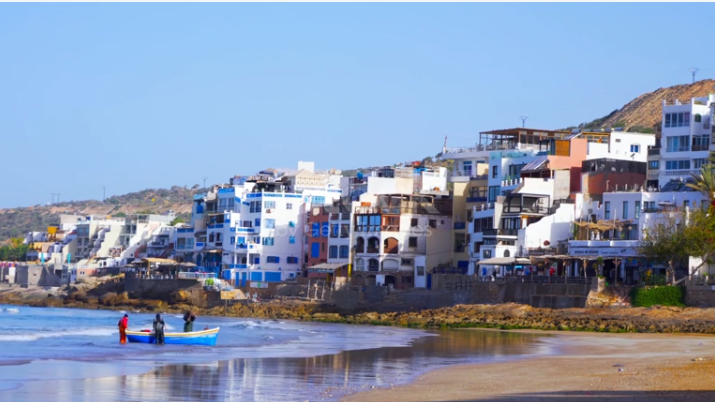
Located about 20 kilometers north of Agadir, Taghazout Beach is popular among surfers and travelers seeking a relaxed atmosphere. While it used to be less adapted, accessibility improvements have been introduced in recent years.
Accessibility:
Newer areas in Taghazout Bay feature paved walkways and ramps leading to the sand. However, parts of the old village still have uneven paths, which can be challenging for wheelchair users.
Assistance Services:
Beach staff and some surf clubs provide basic orientation and support. Lifeguards are not always trained in accessibility assistance.
Accessible Restrooms:
Public accessible restrooms and changing facilities are available in the Taghazout Bay area.
Special Equipment:
Amphibious wheelchairs are limited and mostly available through hotels and resorts.
How to Get There by Public Transport:
Buses and shared taxis run from Agadir to Taghazout. While the journey is straightforward, private taxis or adapted transport are recommended for comfort.
Imourane Beach (Tamraght)
Located between Agadir and Taghazout, Imourane Beach is known for its calm setting and gentle waves. Though less touristy, it has gradually added some accessibility features.
Accessibility:
There is accessible parking nearby and ramps in the newer sections. However, some paths cross loose sand, which may be difficult for wheelchairs.
Assistance Services:
Lifeguards are available during high season, though assistance is limited.
Accessible Restrooms:
Facilities exist but may not always meet international accessibility standards.
Special Equipment:
Currently, no amphibious wheelchairs are provided. Visitors with reduced mobility are advised to plan ahead with local hotels.
How to Get There by Public Transport:
Public buses and shared taxis connect Agadir with Tamraght. Adapted transport is available through private providers on request.
Partially Accessible Beaches – Tifnit Beach and Sidi Ifni Beach
Farther from Agadir, these beaches are renowned for their natural beauty and authenticity, but accessible infrastructure is limited.
Accessibility:
Both beaches have nearby parking and basic paths, though much of the access involves uneven sand.
Assistance Services:
No specialized support or permanent lifeguards are available.
Accessible Restrooms:
Restroom facilities are basic and generally not adapted.
Special Equipment:
No amphibious wheelchairs or specialized equipment are available. These beaches are better suited for sightseeing and relaxing by the sea rather than swimming for visitors with mobility challenges.
How to Get There by Public Transport:
Public transport access is limited. Private cars, taxis, or organized tours from Agadir are the most reliable options.
An Accessible Tour of Agadir’s Cultural Heart in a Wheelchair
Agadir, a modern coastal city in southern Morocco, is known for its golden beaches, vibrant markets, and welcoming atmosphere. After the devastating 1960 earthquake, the city was rebuilt with wide boulevards and modern infrastructure, making it one of the most accessible destinations in the country for wheelchair users and travelers with reduced mobility. Below is a curated, step-free itinerary to explore Agadir’s cultural highlights.
Start of the Tour: Museum of Memory and the Earthquake
Begin at the Museum of Memory, dedicated to the 1960 earthquake that reshaped the city.
Accessibility:
The museum’s contemporary design includes step-free entrances, ramps, and elevators. Clear signage and adapted restrooms make it suitable for all visitors.
What to do:
Learn about Agadir’s history, see photographs and artifacts from the earthquake, and understand how the city rebuilt itself into a modern urban hub.
Walk Toward the Corniche Promenade
From the museum, take a short transfer to the Corniche, Agadir’s iconic seafront promenade stretching several kilometers.
Accessibility:
The promenade is fully paved, wide, and flat, with dropped curbs and accessible seating areas. Ramps connect directly to the beach, and adapted restrooms are available.
What to do:
Enjoy a relaxed stroll or roll along the oceanfront, stop at accessible cafés with step-free entries, or simply take in the views of the Atlantic.
Continue to El Had Souk
Next, head to the El Had Souk, one of the largest markets in southern Morocco, with over 3,000 stalls selling spices, textiles, and crafts.
Accessibility:
The souk is modernized, with wide aisles and step-free access. Restrooms are available, though accessibility standards may vary. Staff are friendly and can assist when needed.
What to do:
Shop for Moroccan handicrafts, taste fresh local produce, or enjoy the lively atmosphere of this cultural hub.
Visit the Kasbah of Agadir Oufella
Take a short taxi or accessible transfer up to the Kasbah of Agadir Oufella, a 16th-century fortress overlooking the city.
Accessibility:
While the historic ruins themselves are limited in accessibility, modern improvements include accessible viewpoints along the road and parking areas. A cable car project is underway to further improve access.
What to do:
Admire panoramic views of the bay and coastline—perfect for photos and appreciating Agadir’s setting between sea and mountains.
Optional Stop: Souss-Massa National Park
If time allows, venture outside the city to the Souss-Massa National Park, a sanctuary for wildlife including the endangered bald ibis.
Accessibility:
Certain trails and observation points are adapted for wheelchair use. Guided tours with adapted vehicles can be arranged.
What to see:
Birdwatching, coastal dunes, and the unique biodiversity of Morocco’s Atlantic coast.
Relax at Paradise Valley
End your day with a scenic transfer to Paradise Valley, located in the Anti-Atlas Mountains.
Accessibility:
Some routes are not suitable for wheelchairs, but organized accessible excursions include paved viewpoints and accessible resting areas.
What to do:
Take in the palm groves, mountain scenery, and pools of turquoise water—ideal for a peaceful end to your cultural tour.
Dinner on the Corniche
Close your day at an accessible restaurant along the Corniche or near the Marina.
Accessibility:
Many establishments have step-free entries, wide interiors, and adapted restrooms. Staff are trained to assist guests with visible and invisible disabilities.
What to try:
Savor Moroccan specialties like fish tagine, couscous with vegetables, or seafood pastilla, while enjoying views of the ocean.
Pure Passion Restaurant – Agadir Marina
Located at the Marina, Pure Passion is one of Agadir’s most renowned fine dining restaurants, offering Moroccan and international cuisine with an emphasis on fresh seafood. It’s ideal for a special evening by the water.
Accessibility: Step-free entrance and wide passageways in the main dining area.
Accessible Restrooms: Spacious, with grab bars and turning space.
Signature Dish: Seafood pastilla with almond and saffron sauce.
Contact Information:
Address: Marina d’Agadir, Quai Est, Agadir, Morocco
Phone: +212 528 84 61 51
Website: purepassion.ma
La Scala – City Center
La Scala offers a refined take on Moroccan cuisine in a stylish garden setting, combining traditional flavors with modern presentation. Popular among locals and visitors alike.
Accessibility: Ramp access at the entrance and flat outdoor terrace seating.
Accessible Restrooms: Adapted facilities with grab bars available.
Signature Dish: Lamb tagine with prunes and almonds.
Contact Information:
Address: Boulevard du 20 Août, Agadir, Morocco
Phone: +212 528 84 85 79
Website: N/A
Les Blancs – Agadir Marina
A Mediterranean restaurant specializing in tapas, seafood, and paella, Les Blancs is located directly on the Marina promenade, making it perfect for a relaxed meal with a sea view.
Accessibility: Step-free entrance and wide terrace suitable for wheelchairs.
Accessible Restrooms: Available, though calling ahead is recommended to confirm features.
Signature Dish: Seafood paella with mussels, clams, and shrimp.
Contact Information:
Address: Marina d’Agadir, Quai Est, Agadir, Morocco
Phone: +212 528 82 36 64
Website: lesblancs.ma
Le Jardin d’Eau – Boulevard du 20 Août
Known for its lush garden setting and eclectic mix of Moroccan and French dishes, Le Jardin d’Eau offers a serene dining atmosphere in the heart of Agadir.
Accessibility: Ramp at entrance and spacious garden pathways.
Accessible Restrooms: Restrooms equipped with grab bars and slip-resistant flooring.
Signature Dish: Couscous royal with lamb, chicken, and seasonal vegetables.
Contact Information:
Address: Boulevard du 20 Août, Agadir, Morocco
Phone: +212 528 84 25 52
Website: N/A
La Villa Blanche – Boutique Hotel & Restaurant
Part of a boutique hotel, La Villa Blanche offers gourmet dining in an intimate setting with French and Moroccan fusion cuisine. Perfect for those seeking an elegant, quiet environment.
Accessibility: Step-free entrance and open-plan dining area.
Accessible Restrooms: Fully adapted facilities with ample maneuvering space.
Signature Dish: Grilled sea bass with lemon butter and local herbs.
Contact Information:
Address: Secteur C, Founty, Agadir, Morocco
Phone: +212 528 21 36 36
Website: villablanche.com