The city of Chania, located on the northwest coast of Crete, is a gem where history, sea, and culture intertwine. The island’s former capital, it blends the elegance of its Venetian harbor with Mediterranean warmth and authentic Cretan charm. Walking through its streets is like traveling through time: Minoan, Byzantine, Venetian, and Ottoman influences all coexist in its monuments, mosques, and pastel-colored mansions.
For a traveler in a wheelchair or mobility scooter, Chania offers a surprisingly pleasant experience, though the Old Town comes with some challenges due to its cobblestone alleys and centuries-old architecture. Many public areas have been restored with modern standards in mind, and newer spaces—such as the seaside promenades, museums, and squares—feature ramps, smooth pavements, and accessible entrances. With good planning, it’s an extremely rewarding and memorable destination.
A Brief History of Chania
Chania is one of the oldest continuously inhabited cities in Europe. It stands on the ruins of ancient Cydonia, a settlement mentioned even in Greek mythology. During the Middle Ages, under Venetian rule (13th–17th centuries), the city flourished as a key Mediterranean port. The Venetians built the harbor, lighthouse, and fortifications that still define its skyline today.
After the Ottoman conquest (1645–1898), Chania was transformed with the addition of mosques, baths, and minarets—many still visible and harmoniously integrated into the cityscape. In 1913, Crete officially united with Greece, and Chania became its first capital until 1971.
A curious note: during World War II, the Battle of Crete was one of the most heroic episodes of the Mediterranean front, and Chania suffered heavy bombardment. Yet its Venetian harbor endured, remaining a symbol of resilience and beauty.
Accessibility in Chania
Accessibility has improved significantly in Chania in recent years:
- Chania International Airport (Ioannis Daskalogiannis): Modern and well-equipped, with adapted facilities, assistance services, and accessible transportation to the city center.
- Public transport: New city buses have ramps and reserved spaces for wheelchairs. Accessible taxis are available upon request.
- Streets and sidewalks: Along the Venetian harbor and the seaside promenade, sidewalks are wide and flat. In the Old Town, some cobblestoned streets can be uneven—caution and good route planning are recommended.
- Museums and attractions: Major museums such as the Archaeological Museum of Chania and the Maritime Museum of Crete are fully accessible. Modern hotels and restaurants generally meet European accessibility standards.
- Tip: The best time to visit Chania is from April to June or September to October, when the weather is mild and the crowds are smaller.
What to See and Do in Chania
1. The Venetian Harbor
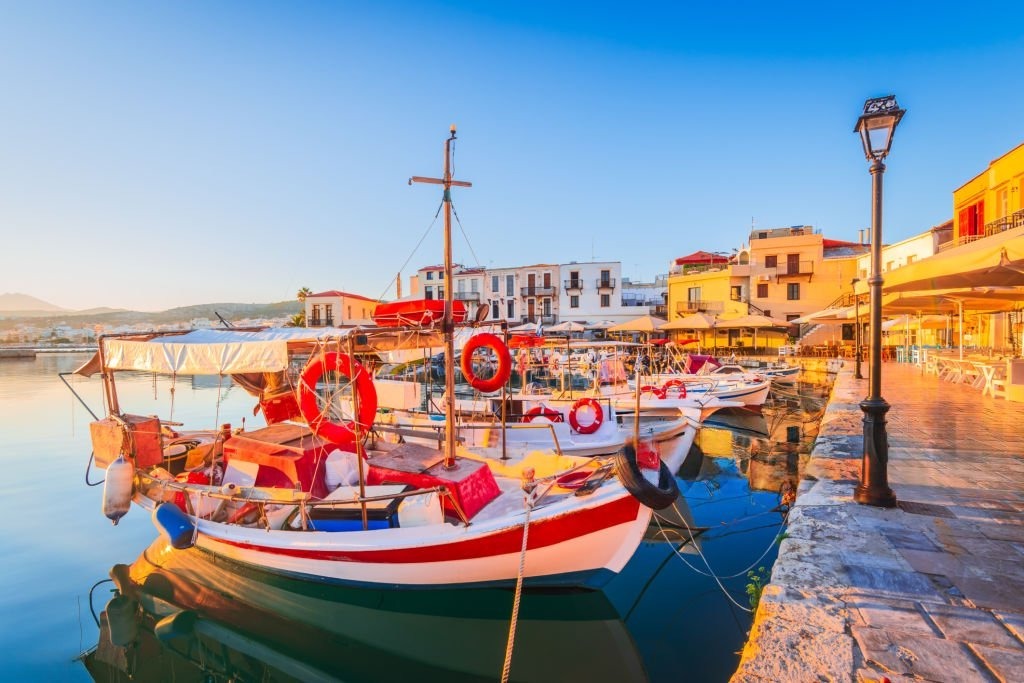
The heart of the city and its most iconic sight. A stroll along the harbor, with its colorful facades and 16th-century lighthouse, is unforgettable. The entire promenade is flat and accessible, perfect for wheelchairs or scooters, with ramps leading to cafés and terraces.
2. The Lighthouse of Chania
Although the interior is not accessible, it can be admired from the promenade—especially at sunset, when the sky glows in golden and pink hues.
3. Archaeological Museum of Chania
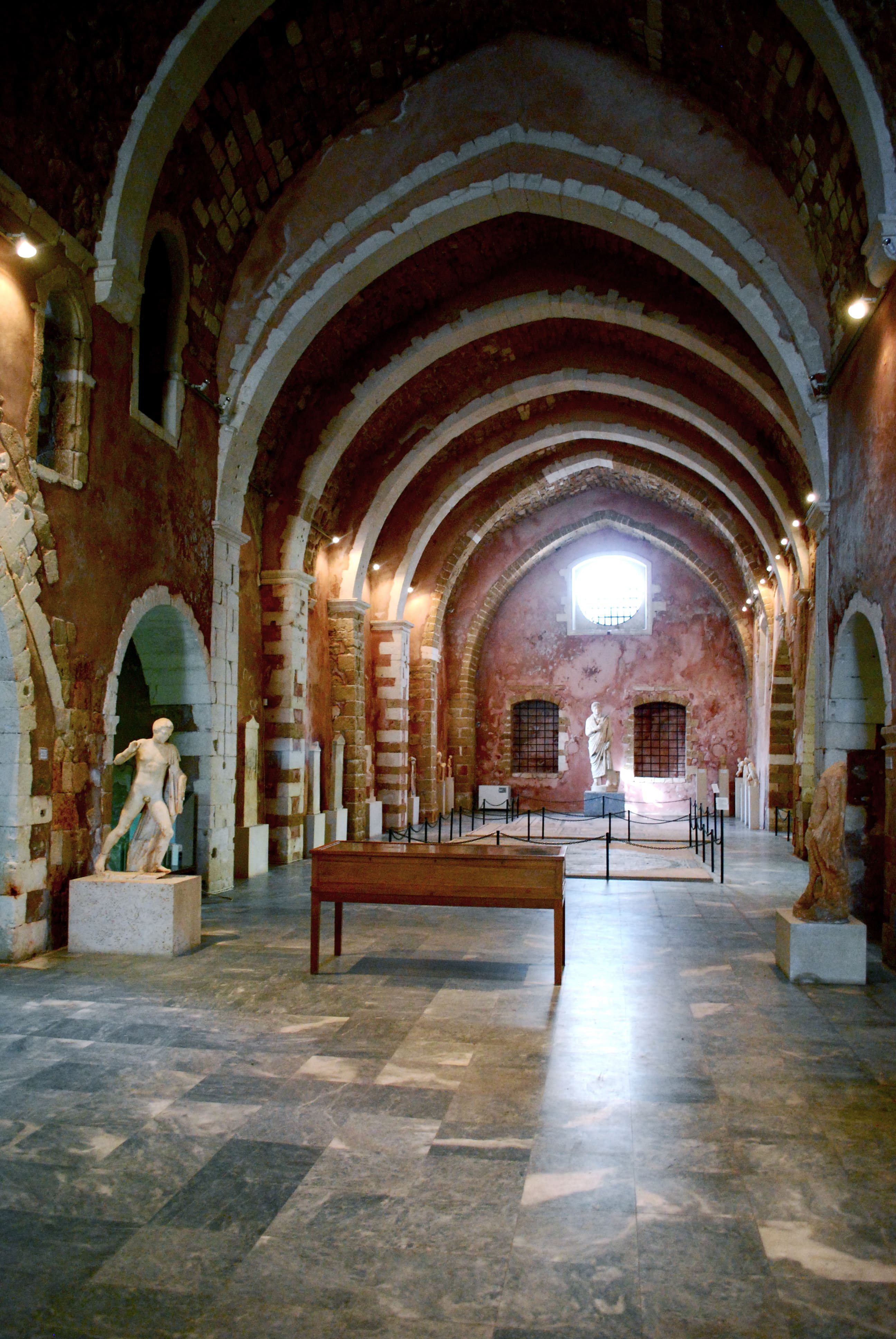
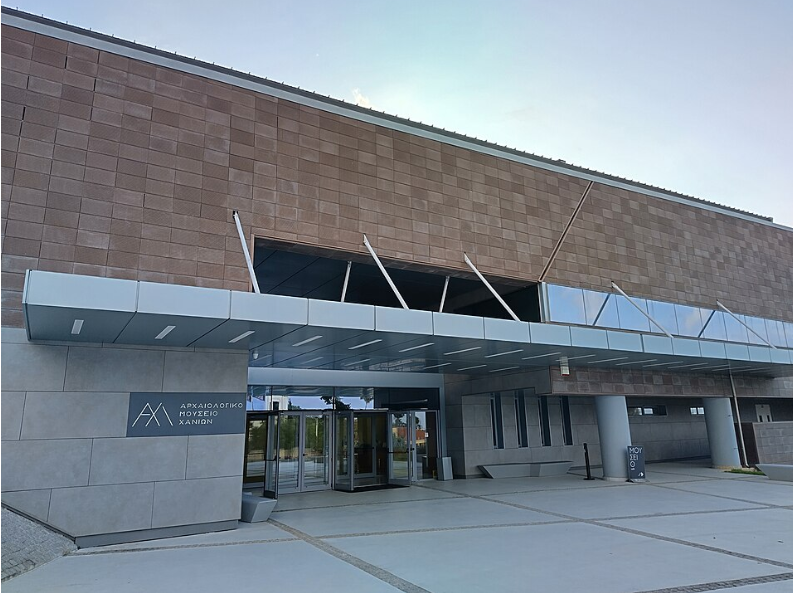
Located in a restored Venetian monastery, the museum displays artifacts from the Minoan to the Roman periods. Its new building in the Halepa district includes elevators and adapted facilities.
4. Mosque of the Janissaries (Yiali Tzami)
Situated right by the harbor, this is one of Chania’s most recognizable landmarks. The surrounding area is completely level and easy to access, making it perfect for photos and rest stops.
5. Halepa District
A former diplomatic quarter with elegant 19th-century mansions and sea views. Its broad avenues and smooth pavements make it ideal for accessible exploration.
6. Municipal Park of Chania
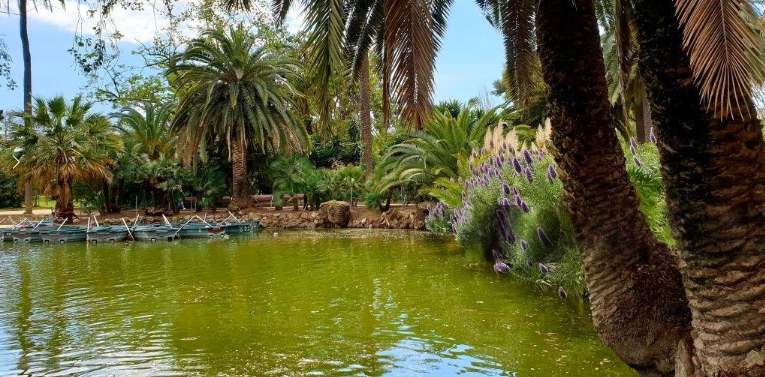
A peaceful green oasis in the city center, with wide, shaded, and accessible paths—a great place to relax.
7. Nea Chora Beach
Just a 10-minute ride from the Old Town, this is Chania’s most accessible urban beach, featuring ramps, wooden walkways, adapted showers, restrooms, and seafront tavernas.
Unique Experiences
- Cretan cuisine: Enjoy local specialties like dakos (barley rusk with tomato and mizithra cheese), olive oil, and regional wines. Many harborfront restaurants are step-free and wheelchair-friendly.
- Accessible excursions: Local tour operators offer adapted excursions across western Crete, including visits to Rethymno, Aptera, or Lake Kournas.
- Sunset at the harbor: One of the most magical in the Mediterranean—fully accessible from the promenade and best enjoyed with a drink by the sea.
Practical Tips
- Avoid the peak heat: July and August can exceed 35°C (95°F). Stay hydrated and wear a hat if using an electric scooter.
- Book accessible accommodation: Hotels in modern areas like Koum Kapi or Halepa offer adapted rooms and bathrooms.
- All-terrain mobility options: Some local companies rent beach or terrain-adapted wheelchairs for exploring natural areas.
- Airport assistance: Request support from your airline at least 48 hours before your flight for a smooth arrival.
Fun Fact
Chania’s lighthouse, the city’s emblem, was originally built by the Venetians in the 16th century, rebuilt by the Ottomans in the form of a minaret, and restored by the Greeks in the 19th century. It remains one of the oldest operating lighthouses in the Mediterranean.
Conclusion
Chania is a city where time slows down between the sound of the waves and the scent of jasmine. Its blend of cultures, Venetian harbor, and Cretan hospitality create an atmosphere that’s both vibrant and timeless.
For travelers in a wheelchair or mobility scooter, it offers a rare mix of history, accessibility, and Mediterranean charm. From rolling along the harbor promenade to savoring fresh seafood by the sea, Chania invites you to experience Crete at your own pace—welcoming, beautiful, and unforgettable.
With the goal of providing the highest level of service to all its visitors, including people with reduced mobility, Chania offers a growing network of tourist information offices and visitor centers strategically located across the city and its surroundings.
These offices are dedicated to delivering personalized guidance, accessible maps, and up-to-date information on cultural events, transportation, accessible routes, and inclusive services.
Each office is designed to accommodate travelers requiring additional support, ensuring a comfortable, safe, and enriching stay on the island of Crete.
Main Tourist Information Offices in Chania
1. Central Tourist Information Office – Old Venetian Harbor
Address: Akti Kountourioti, Old Venetian Harbor, Chania, Crete, Greece
Phone: +30 28210 92943
Email: [email protected]
Located directly on the promenade of the Venetian Harbor, this is the city’s main tourist information point. Staff provide assistance with maps, attraction details, and guidance for accessible routes through the harbor and Old Town.
The office features step-free access, tactile signage, and staff trained to assist visitors with mobility or sensory impairments. Accessible restrooms are available nearby.
2. Municipal Tourist Information Office – 1866 Square
Address: 1866 Square, Chania City Center, Crete, Greece
Phone: +30 28210 98888
Email: [email protected]
Situated in one of the most central and accessible areas of the city, this office serves as a hub for travelers arriving from the airport or intercity bus terminal.
It provides information on accessible hotels, restaurants, beaches, and museums, as well as updated schedules for accessible buses and taxis.
Facilities include low reception counters, ramps, and seating areas suitable for wheelchair users.
3. Chania Regional Tourist Information Office – Koum Kapi
Address: Akti Miaouli, Koum Kapi Seafront, Chania, Crete, Greece
Phone: +30 28210 55555
Email: [email protected]
Located along the modern seafront district of Koum Kapi, this office is ideal for visitors staying in the area’s accessible hotels and guesthouses.
It offers large-print materials, maps highlighting step-free routes, and real-time updates on accessible cultural events and guided tours.
The building includes automatic doors, wheelchair ramps, and a rest area with accessible seating and water dispensers.
4. Halepa Cultural Information Office
Address: Eleftheriou Venizelou Avenue, Halepa District, Chania, Crete, Greece
Phone: +30 28210 90123
Email: [email protected]
Located in the elegant Halepa district, this office provides detailed information about Chania’s architectural heritage, museums, and historic mansions.
Staff are trained to advise visitors on the most accessible walking routes in the area and to arrange adapted taxis or transfers to nearby attractions.
The facility includes ramp access, adapted toilets, and multilingual staff proficient in English, French, and Greek Sign Language.
5. Nea Chora Beach Visitor Kiosk
Address: Nea Chora Beach Promenade, Chania, Crete, Greece
Phone: +30 28210 77770
Email: [email protected]
Located beside Chania’s most accessible urban beach, this seasonal kiosk provides information on accessible bathing facilities, including ramps into the sea, Seatrac systems (self-operating beach wheelchairs), and nearby accessible cafés and restaurants.
The kiosk is step-free and has shade structures, an information desk at wheelchair height, and staff available during summer months (May–October).
Tourist Passes and Accessible Experiences
Although Chania does not currently have a city-specific tourist card, several regional passes and programs include benefits for travelers with reduced mobility:
Crete Museum Pass
- Grants access to major museums and archaeological sites in Chania, Heraklion, and Rethymno. Most participating sites are partially or fully accessible.
- Price: €20 (valid for 3 days)
- Includes accessible venues such as the Archaeological Museum of Chania and the Maritime Museum of Crete.
Hop-On Hop-Off Chania Sightseeing Bus
- A panoramic bus service that stops at key attractions including the Venetian Harbor, Koum Kapi, Nea Chora, and Halepa.
- Price: approx. €15 per day
- The lower deck is wheelchair accessible, and staff are trained to assist with boarding.
Accessible Guided Tours
Local operators offer tailor-made accessible tours for wheelchair users and slow walkers, covering Chania’s Old Town, wine-tasting experiences, and day trips to Rethymno or Aptera.
Vehicles with ramps and adapted equipment are available on request.
Commitment to Accessibility
All of Chania’s tourist information offices operate under the same guiding principle: ensuring equal access to information, services, and facilities for all visitors.
The city and the Region of Crete are committed to promoting inclusive tourism, continually improving accessibility in public spaces, transportation, and cultural venues.
Visitors with reduced mobility can rely on:
- Personalized assistance and multilingual staff
- Barrier-free routes in the Venetian Harbor and modern districts
- Accessible beaches with adapted facilities
- Adapted transportation and taxis
- Hotels certified for accessibility compliance
From exploring the colorful harbor to relaxing at Nea Chora Beach or discovering the refined architecture of Halepa, Chania welcomes every traveler with its unique blend of history, hospitality, and inclusion.
Airport
Chania is served by Chania International Airport “Daskalogiannis” (CHQ), located about 14 km (9 miles) east of Chania city center on the Akrotiri Peninsula. CHQ is Crete’s second-busiest airport after Heraklion, offering domestic and international flights year-round, with seasonal routes connecting major European cities.
The airport operates in compliance with European Union Regulation (EC) 1107/2006 concerning the rights of disabled persons and persons with reduced mobility (PRM) when traveling by air. Free assistance is available for PRM passengers throughout their journey — from arrival at the terminal to check-in, security, boarding, and baggage claim.
Assistance should be requested at least 48 hours in advance through the passenger’s airline or via the airport’s information desk.
Website: www.chq-airport.gr
Accessible facilities at Chania International Airport (CHQ):
- Step-free access, automatic doors, and wide pathways throughout the terminal.
- Elevators and ramps connecting all levels and gates.
- Designated seating and waiting areas for passengers using wheelchairs.
- Accessible restrooms near all gates and public areas.
- Visual and audible announcements for flight information.
- Reserved accessible parking spaces located close to the terminal, with shuttle assistance available on request.
- Certified assistance dogs are welcome; relief areas are located near the main entrance.
Port
Chania’s main maritime gateway is the Port of Souda, situated approximately 7 km (4 miles) east of the city center. It serves both passenger ferries (including routes to Piraeus, Athens) and cruise ships, as well as local and private vessels.
The Souda Port Authority has implemented accessibility improvements in line with European maritime accessibility standards, ensuring that passengers with reduced mobility can navigate the port safely and comfortably.
Facilities include:
- Ramps and barrier-free pathways connecting docks and terminal areas.
- Accessible ticket offices, restrooms, and waiting lounges.
- Clear bilingual (Greek/English) signage and information screens.
- Elevators in multi-level terminal sections.
- Accessible taxis and public transportation available directly outside the port area.
- Ferry operators such as ANEK Lines and Blue Star Ferries offer assistance for passengers with mobility needs upon advance request.
- Website: www.port-souda.gr
Connections from Chania International Airport (CHQ) to Chania City Center
KTEL Public Bus
- Bus stop located outside the arrivals terminal.
- Destination: Chania Central Bus Station.
- Travel time: 25–30 minutes.
- Fare: €2.50–3.00.
Buses are equipped with low-entry access and reserved spaces for wheelchairs (advance notice recommended).
Accessible Taxi or Ride-Share
- Available directly outside the arrivals hall.
- Fare: €20–25 to Chania city center.
- Wheelchair-accessible taxis available upon request; pre-booking recommended.
Private Transfer or Shuttle Services
- Many hotels and local companies offer lift-equipped vans and private transfers.
- Reservations should be made in advance to ensure accessible vehicle availability.
Connections from Souda Port to Chania City Center
Public Bus (KTEL Line Souda–Chania)
Bus stop located near the ferry terminal exit.
- Travel time: 15–20 minutes.
- Fare: €1.20–1.80.
- All buses are low-floor and wheelchair accessible.
Accessible Taxi
- Available at the port exit 24/7.
- Approximate fare: €10–15 to downtown Chania.
- Accessible vehicles can be arranged through local taxi companies on request.
Conclusion
With its modern airport, efficient ferry connections, and accessible public transport, Chania, Greece offers inclusive and comfortable travel options for all visitors.
Both Chania International Airport (CHQ) and the Port of Souda comply with EU accessibility standards, ensuring smooth travel experiences for passengers with reduced mobility.
Whether arriving by air or sea, travelers can expect courteous assistance, clear information, and barrier-free facilities — making Chania a welcoming and accessible Mediterranean destination.
The region of Chania, on the island of Crete, is renowned for its natural beauty and for offering several beaches equipped with facilities and services that ensure accessibility for visitors with reduced mobility.
Thanks to national and local initiatives promoting inclusive tourism, many beaches in Chania feature the SEATRAC system, which allows wheelchair users to independently and safely enter the sea.
Below are three beaches recognized for their accessibility features, inclusive infrastructure, and visitor-friendly amenities:
1. Agii Apostoli Beach (Agii Apostoli, Chania)
Location: Only 4 km west of Chania city center, easily accessible by taxi or local bus (KTEL line toward Kalamaki).
Accessibility features:
- SEATRAC system enabling autonomous sea access for wheelchair users.
- Paved paths and walkways leading directly to the shoreline.
- Accessible toilets and changing facilities near the parking area.
- Adapted showers, umbrellas, and shaded resting areas.
- Reserved parking spaces for persons with disabilities.
- Nearby beach cafés and snack bars with step-free entrances.
- Website: www.seatrac.gr (search: Agii Apostoli Beach, Chania)
2. Nea Chora Beach (Chania)
Location: Only 1 km from Chania’s Old Town, this urban beach is one of the most convenient and accessible in the city.
Accessibility features:
- Direct access with ramps from the seafront promenade.
- SEATRAC system available during the summer season (June–September).
- Accessible restrooms, changing cabins, and showers.
- Mobi-mat style walkways over the sand for easy wheelchair mobility.
- Shaded zones and reserved seating for PRM visitors.
- Nearby restaurants and cafés offering step-free access.
- Website: www.chaniatourism.com
3. Agia Marina Beach (Agia Marina, Chania)
Location: Approximately 9 km west of Chania city center, in one of Crete’s most popular seaside resort areas.
Accessibility features:
- Equipped with a SEATRAC system and solid pathways from parking areas to the water.
- Accessible toilets and showers throughout the beach area.
- Shaded seating and resting zones suitable for wheelchair users.
- On-site assistance staff available during peak summer months.
- Fully accessible via public buses (KTEL line) and adapted taxis.
- Nearby hotels and restaurants with barrier-free facilities.
- Website: www.agiamarina-chania.com
Conclusion
The beaches of Agii Apostoli, Nea Chora, and Agia Marina stand out as excellent examples of Chania’s commitment to accessible and inclusive tourism.
Their modern infrastructures, SEATRAC installations, and support services ensure a safe, comfortable, and independent experience for all visitors, regardless of mobility level.
With its welcoming atmosphere and inclusive coastal design, Chania, Crete, offers one of the most accessible and enjoyable beach destinations in the Mediterranean.
Accessible Route through Central Chania, Greece
The accessible route through central Chania begins at the Municipal Market of Chania (Agora), one of the city’s most recognizable landmarks and a hub of local culture. The market’s main entrance features ramp access and wide automatic doors, allowing easy entry for wheelchair users. Inside, visitors find step-free aisles, smooth flooring, and accessible restrooms nearby. The surrounding sidewalks have curb ramps leading toward the Old Town and Venetian Harbor.
From the market, the route continues north toward the Old Venetian Harbor, Chania’s most iconic area. The promenade is flat, paved, and largely barrier-free, offering stunning sea views. Along the way, visitors can explore accessible shops, cafés, and tavernas that line the waterfront. Many establishments have step-free entrances and accessible seating areas with shade. Benches and resting points are placed at regular intervals, making this stretch comfortable for wheelchair and mobility scooter users.
One of the highlights along this route is the Maritime Museum of Crete, located at the entrance to the Firkas Fortress. The museum provides ramp access to the main exhibition areas, wide interior pathways, and adapted restrooms. Multimedia exhibits include audio guides and captioned videos, and staff are available to assist visitors with reduced mobility.
Continuing east along the waterfront, visitors reach the Venetian Lighthouse viewpoint, one of Chania’s most photographed spots. While the historic lighthouse itself is not accessible due to uneven terrain and steps, the promenade viewpoint area provides smooth, flat surfaces and clear panoramic views, making it an ideal photo stop for all visitors.
Heading back toward the city center through Kountourioti Street, travelers can visit the Nautical Square (Platia Talo) and nearby Mosque of the Janissaries (Yiali Tzami), both surrounded by open plazas with level surfaces and ramp access. The mosque’s surrounding area is home to several accessible art galleries and souvenir shops, many featuring wide doorways and barrier-free interiors.
A short distance inland lies the Archaeological Museum of Chania, housed in a modern, purpose-built facility designed to meet full EU accessibility standards. The museum offers elevator access to all floors, accessible restrooms, and tactile exhibits for visitors with visual impairments. Wheelchairs are available at the entrance upon request, and service animals are welcome.
From here, visitors can continue along Halidon Street, one of Chania’s main pedestrian avenues connecting the Old Town to the harbor. The street features smooth paving, gentle gradients, and numerous shaded resting areas. Street vendors and local artisans line the path, many offering accessible counters and displays at varying heights.
The route concludes at the Nea Chora Beach, just west of the Old Town. This beach is one of the most accessible in Crete, featuring the SEATRAC system for independent sea access, accessible restrooms and showers, and paved walkways from the promenade to the sand. Nearby restaurants and cafés provide step-free access and reserved seating areas for wheelchair users. The entire promenade is flat and barrier-free, offering a pleasant coastal experience to end the tour.
Visitors can easily return to the starting point—the Municipal Market—by accessible taxi or low-floor KTEL bus, completing a loop that showcases Chania’s historic charm, seaside beauty, and commitment to inclusive, barrier-free travel for visitors of all abilities.
Thalassino Ageri – Chef Nikos Koulouris
Located in the Tabakaria district of Chania, Thalassino Ageri offers one of Crete’s most authentic fine-dining experiences by the sea. The restaurant specializes in fresh Mediterranean seafood, prepared with traditional Cretan techniques and seasonal ingredients sourced from local fishermen and farms. The atmosphere is serene and elegant, with tables set right on the waterfront, offering panoramic sunset views over the Aegean Sea.
The venue is fully accessible, featuring step-free entry, wide pathways, and accessible restrooms. The outdoor terrace includes level flooring suitable for wheelchairs and mobility scooters.
Signature dishes include grilled octopus, fresh catch of the day, and olive-oil–based delicacies that reflect the island’s maritime heritage.
Contact details
Address: 49 Vivilaki St, Tabakaria, Chania 731 33, Crete, Greece
Phone: +30 2821 051136
Email: [email protected]
Website: https://www.thalassino-ageri.gr
Salis – Chef Afshin Molavi
Situated on the Nea Chora waterfront, Salis presents a modern interpretation of Cretan gastronomy rooted in sustainability and innovation. Chef Afshin Molavi emphasizes locally grown, organic ingredients, crafting dishes that combine traditional Greek flavors with contemporary culinary artistry. The dining space is minimalist yet welcoming, featuring natural materials and sea views.
The restaurant is fully accessible, with a level entrance, spacious seating arrangements, and adapted restrooms. Staff are trained to assist guests with mobility or sensory needs. The tasting menus highlight creations such as slow-cooked lamb, local cheeses, and seafood carpaccio, paired with organic Cretan wines.
Contact details
Address: Akti Papanikoli 1, Nea Chora, Chania 731 31, Crete, Greece
Phone: +30 2821 043700
Email: [email protected]
Website: https://www.salis-restaurant.gr
Pallas – Executive Chef Vassilis Androulakis
Overlooking the Venetian Harbor of Chania, Pallas combines historic architecture with modern fine dining. Housed in a beautifully restored 19th-century building, the restaurant offers a menu blending Cretan and international flavors with a focus on premium local ingredients. Its rooftop terrace provides breathtaking views of the old port and lighthouse.
The venue offers step-free access via ramp, elevator service to upper levels, and accessible restrooms. The dining areas are spacious and well-lit, designed to accommodate wheelchairs comfortably. Signature dishes include sea bass fillet with citrus sauce, truffle risotto, and handmade desserts inspired by Cretan honey and herbs.
Contact details
Address: Akti Tompazi 15, Venetian Harbor, Chania 731 32, Crete, Greece
Phone: +30 2821 054074
Email: [email protected]
Website: https://www.pallaschania.gr